⚠️ Important: the fountains at Versailles run April 1-November 1, 2026, but NOT every day. Musical Fountains Show: Saturdays/Sundays + select Tuesdays. Musical Gardens (no fountains running): Tuesday-Friday. Jump to fountains schedule | Best fountains
The Versailles fountains are one of the palace’s greatest spectacles – 50 fountains, 620 water jets, baroque music, and 17th-century engineering that still works today. But timing matters: the fountains only run from April 1 to November 1 on specific days and times, and there are different shows with different experiences (some with fountains running, some without).
This guide covers the 2026 Versailles fountains schedule, explains what each show offers, highlights the most spectacular fountains, and shows you where to find them. Whether you’re planning your visit around the shows or just want to know which fountains are worth your time, here’s everything you need to know.
Last update: May 2026
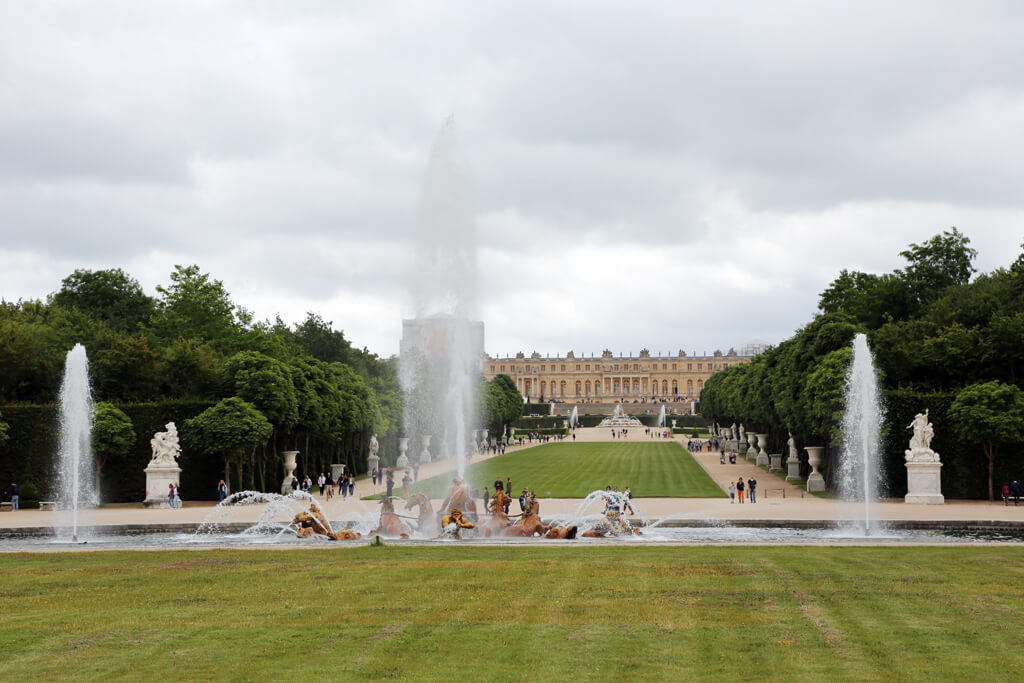
Table of Contents:
- Versailles Fountains Schedule 2026
- Musical Gardens vs. Musical Fountains (What’s the Difference?)
- Best Fountains of Versailles
- Versailles Fountains Map
- How Versailles Fountains Work (Water Supply)
Check out my other Versailles Guides
Versailles Fountains Schedule 2026
During the Versailles Fountain Shows, the fountains don’t run all day. Getting familiar with the Versailles Fountains schedule is essential – especially if you also want to visit the Château and the Trianons.
Before your visit, check the Versailles Fountain Show times and plan your itinerary accordingly to make the most of your day at Versailles.
1. Automatic fountains of Versailles running all day:
Neptune’s basin:
- weekends: from 10 a.m. to 5 p.m., then from 5:45 to 6:45 p.m. – 5 minutes every 15 minutes
- Tuesdays and holidays: from 10 a.m. to 6:45 p.m. – 5 minutes every 15 minutes
The Mirror Basin: from 10 a.m. to 7 p.m.* – 7 minutes every 10 minutes
The Water Theater Grove: continuously from 10 a.m. to 7 p.m.*
2. Other Fountains’ Schedule in the morning:
The Great Perspective (the Water Parterre + the Latona Basin + the Apollo Basin): from 10:30 a.m. to 12 p.m.
Groves and pools on the south side: groves of the Ballroom, the Colonnade, the Girandole, and the Room of the Chestnut Trees, as well as the Bacchus and Saturn pools, are running from 10:30 to 11:30 a.m.
3. Other Fountains’ Schedule in the afternoon:
The Great Perspective (the Latona Basin + the Apollo Basin): from 2 to 2:30 p.m., from 3 to 4:15 p.m., and from 4:45 to 5 p.m.
All groves and ponds in the gardens: from 2:30 to 3:15 p.m. and from 4 to 4:45 p.m.
Water display of Neptune Basin with a historic jet finale at 5:20 p.m.
Musical Gardens vs. Musical Fountains (What’s the Difference?)
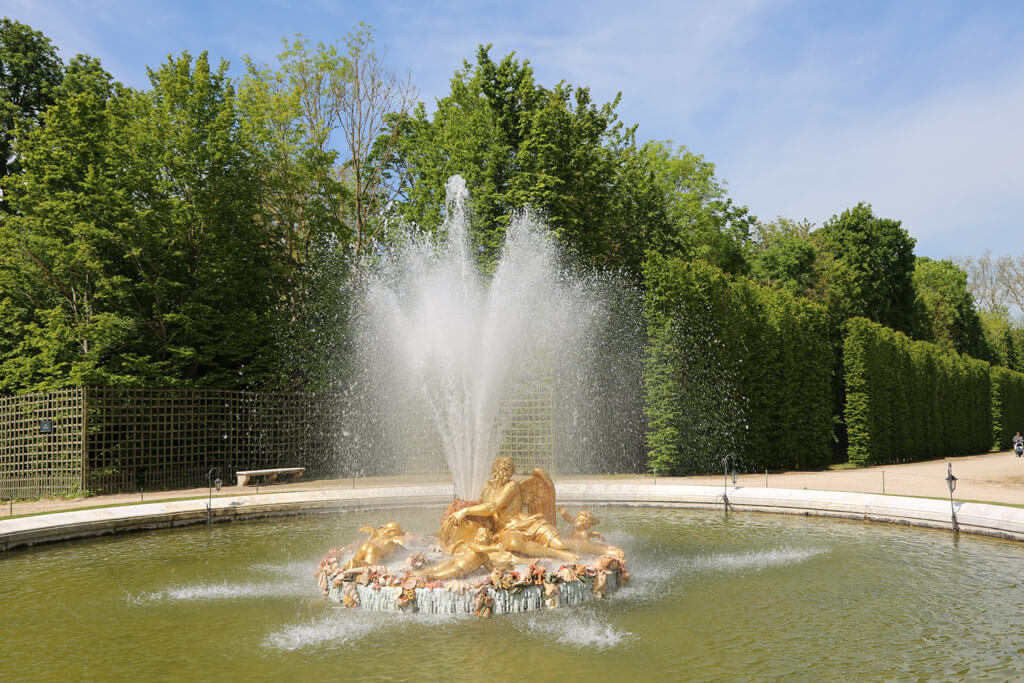
During the high season, the Gardens of Versailles host two daytime shows: the Versailles Musical Gardens and the Versailles Musical Fountains Show.
The main difference between them (Versailles Musical Gardens vs. Musical Fountains shows) is that the fountains do not operate during the Musical Gardens show. Because of this, tickets for the Musical Fountains Show are slightly more expensive.
You can visit either garden show without entering the Château. However, if you plan to visit both the Château and the gardens, the Versailles Passport ticket offers the best value.
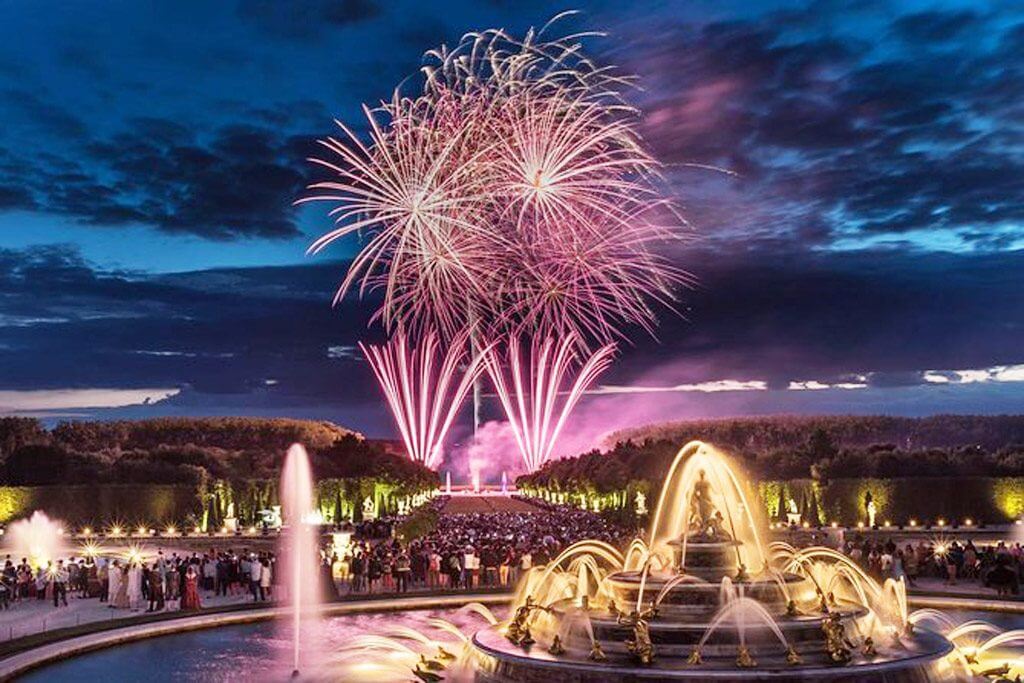
In addition to the daytime shows, Versailles hosts a nighttime fountain show (Les Grandes Eaux Nocturnes) during the summer months – a spectacular visual and musical experience.
Stroll through the beautifully illuminated gardens as the fountains and groves come alive to the sound of music. The show concludes with a grand finale: a fireworks display over the Grand Canal. This night show is not included in the Versailles Passport.
When Do the Fountains Run at Versailles?
- Musical Gardens: Music only, NO fountains (Tuesday-Friday)
- Musical Fountains: Music + fountains (Saturday-Sunday + select Tuesdays* + Public holidays in France)
- Night Show: Fountains + lights (Saturday evenings from 8.30p.m. to 11.05p.m.)
*select Tuesdays: Tuesdays from 5 May to 30 June 2026
Elisa’s Local Tip: Transportation after the Fountains Night Show can be tricky. The last train to Paris leaves around midnight, and because most visitors stay for the Grand Finale, trains become extremely crowded. To avoid the rush, consider booking a private transfer from Versailles to your hotel in Paris with Welcome Pickups.
Another great option is to spend the night in one of the hotels near the Château de Versailles and use the next day to explore the city, enjoy a bike ride, or have a picnic in the park.
Best Fountains of Versailles
The Fountains of Versailles are one of the highlights of the palace, carefully designed to glorify King Louis XIV, the Sun King. From the 1660s onward, the best architects, artists, and gardeners – Le Vau, Mansart, Le Brun, Girardon, Le Nôtre, and others – brought his vision to life, creating fountains that awe visitors with water, sculpture, and movement.
The Fountains of Versailles come in a variety of styles and sizes, each telling its own story. Here’s a selection of the best fountains at Versailles – not only for their beauty but also for their key role in the palace’s water system.
Water Parterres (Parterres d’Eau)
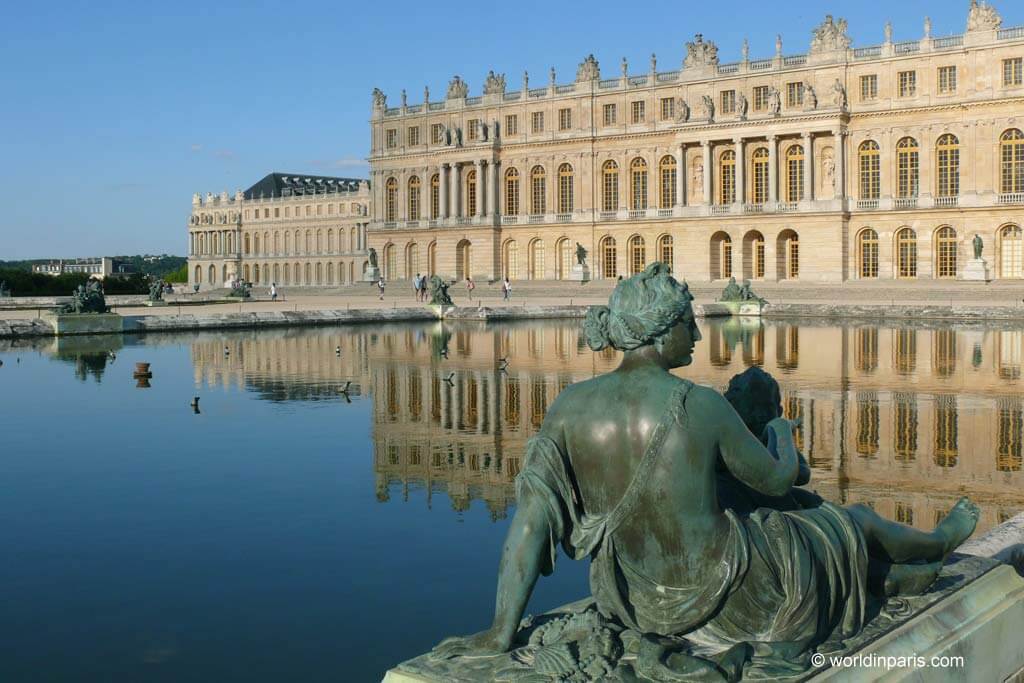
These water parterres at the foot of the Château (Mirror Basin) have two water jets. Because they are visible from the Palace, King Louis XIV wanted to see the water jets working all the time.
The basins are bordered by four groups of two sculptures representing the main French rivers and their tributaries.
Below the terrace, there’s a big water reservoir of 3,400 m3. It was built in 1672 to supply the Palace of Versailles’ fountains. From here, the water is distributed to the Latona Fountain or the Salle de Bal. This underground site is like a small water cathedral!
Latona Fountain
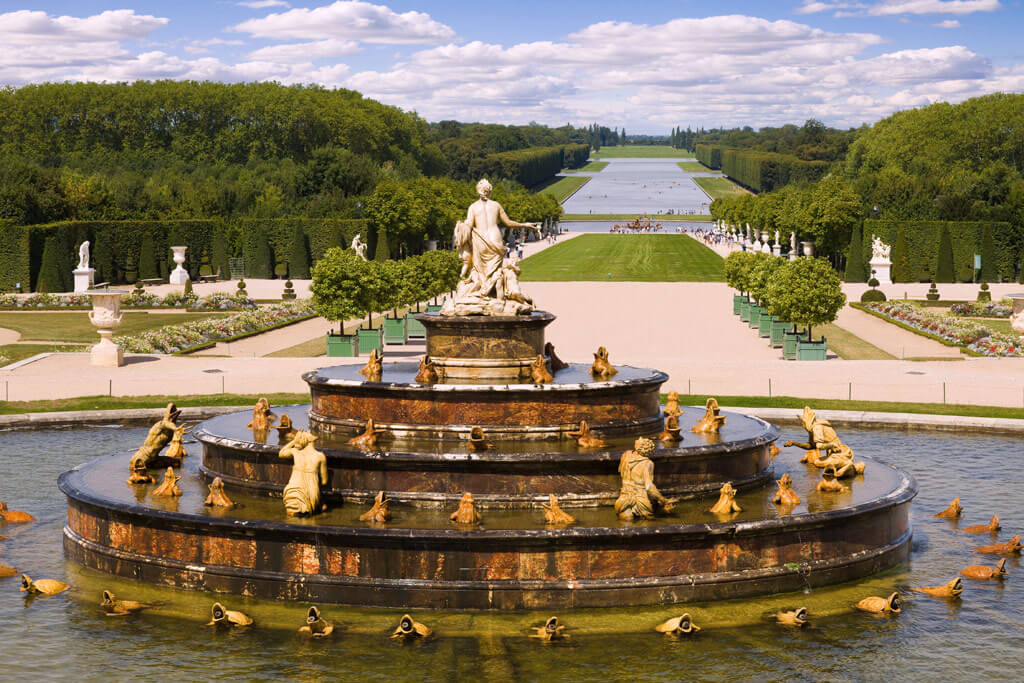
This is one of the most important fountains at Versailles, from an aesthetic and symbolic point of view and a technical point of view.
Latona Fountain is part of the Grande Perspective, together with the Apollo Fountain and the Grand Canal. It illustrates the story of Latona, the mother of Apollo and Diana, who protects her children from the insults of Lycia’s peasants. She pleads with Jupiter to avenge her, and the god turns the inhabitants of Lycia into frogs and lizards. Latona Fountain also has a parterre containing two Lizard Fountains.
Latona Fountain occupies a nodal place in the heart of the Petit Parc, and it has the role of redistributing the waters. Thanks to this fountain, Versailles gets the necessary water to feed most of the fountains.
The water jets on the Water Parterres above converge into the Latona Fountain. This fountain spreads the water, always by gravity, to the water basins in the south, to a part of the Enceladus Fountain, and to Apollon’s Chariot below.
Latona Fountain is a fascinating fountain also below the ground. It has around 70 water jets, each fed by a different pipe, creating a complex network of pipes nicknamed “the spider.” This civil work of engineering is unique in the world, and most of these pipes still date from the reign of King Louis XIV!
Apollo Fountain
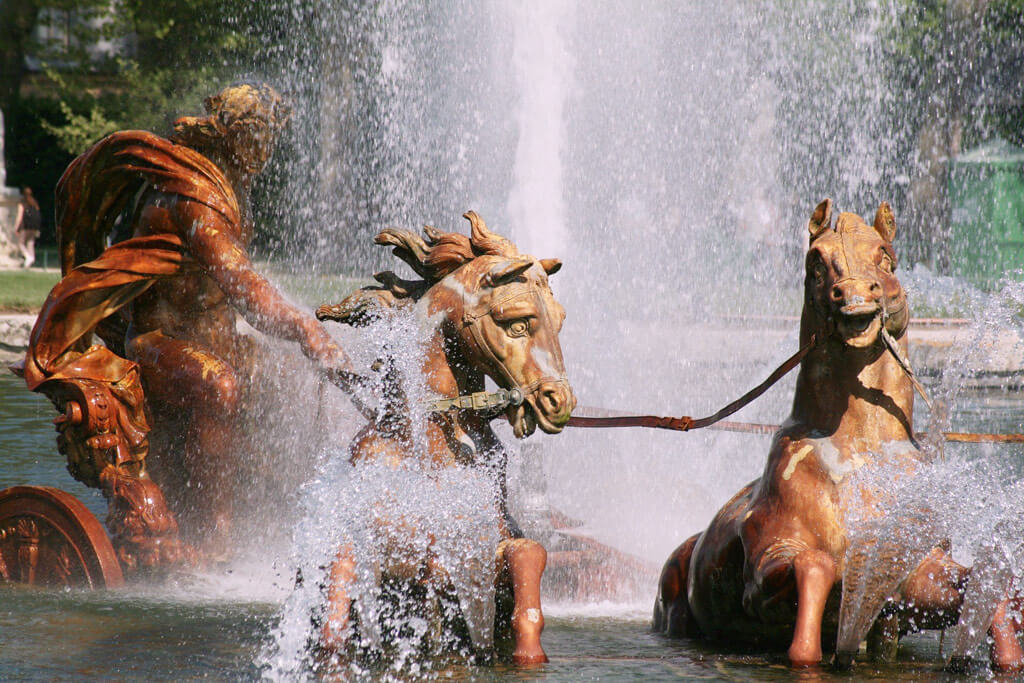
The Apollo Foutain is another of the key elements of the Grande Perspective. It has existed since the time of King Louis XIII, and it was known as the Lake of the Swans. Later, King Louis XIV added the spectacular Apollo riding his chariot.
Apollo is the Sun God, one of the 12 Greek Gods of Mount Olympus, and the symbol of King Louis XIV. The Apollo Fountain features the god bursting forth from the water in anticipation of his daily flight above the earth.
The Apollo Fountain is fed by Latona Fountain by gravity.
La Salle de Bal (The Ballroom)
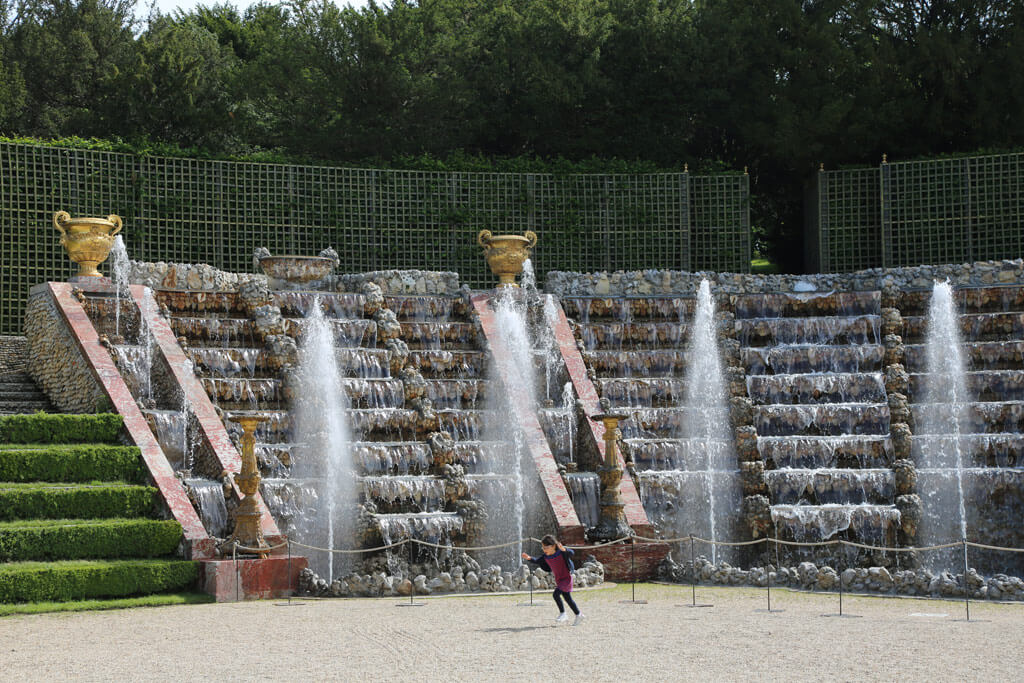
The Salle de Bal is the last groove designed by André Le Notre between 1678 and 1682, and it represents a kind of open-air amphitheater.
Here, Le Notre got the most out of the land’s different elevations by creating a big cascade where the water arrives by gravity from the reservoirs below the Palace’s water beds. In the center of this ballroom, there was a kind of stage or dance floor (today disappeared) while the musicians were found on the top of the amphitheater.
This Salle de Bal was not good for shows (the cascade is very noisy), but the King organized frequent soirées or dinners here. These dinners were delightful in the summer, surrounded by the wall of freshwater.
The Salle de Bal is closed during the winter. It is only accessible during the Versailles Fountain Shows.
Enceladus Fountain
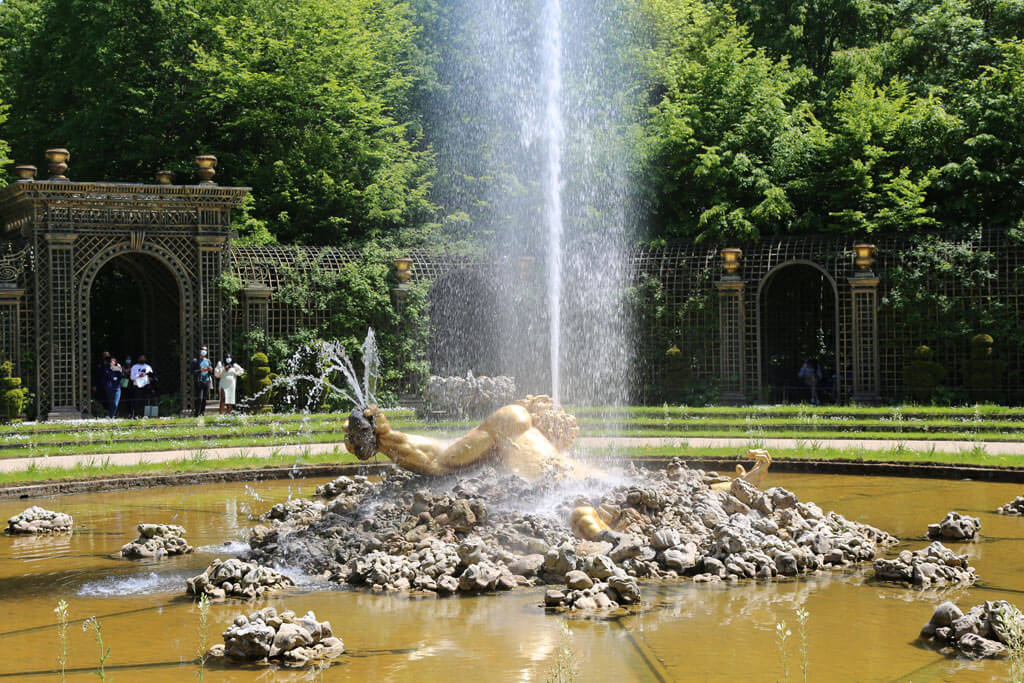
This is one of the most original fountains Versailles has to offer. The Enceladus Fountain dates from 1675, and it represents the giant Enceladus buried under the rocks of Mount Olympus by the gods he and his brothers had wished to dethrone.
In the fountain, the giant is struggling to survive, and his suffering is captured by a powerful water jet that springs from his mouth like a scream.
Enceladus has an impressive water jet of 23 meters, one of the gardens’ highest jets. This fountain is only accessible during the Versailles Fountain Shows, but out of season, you can see the giant from the fence.
Apollo’s Bath
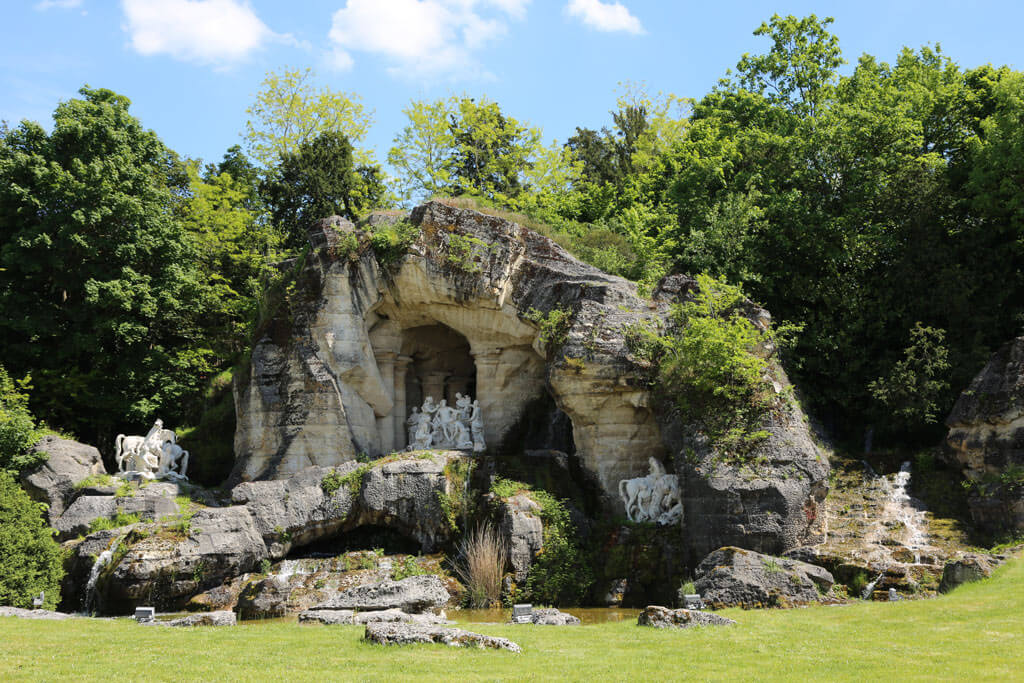
This groove was designed by the painter Hubert Robert during King Louis XVI’s reign between 1778 and 1781. It features three sculpture groups and represents the care provided to Apollo (the Sun God) and his horses after their daytime flight above the Earth.
“When the Sun is tired and has ended his day in the west
He goes down to Tethys place to take his rest
Thus, Louis relaxes in the same way
From a duty that begins each day again.”
The sculptures were recycled from the Tethys Grotto, which was demolished to build the present North Wing of the Palace, and they are considered a masterpiece of French sculpture in the 17th century.
This groove is only accessible during the Versailles Fountain Shows, and there’s no way to see anything of this fountain during the low season.
Neptune Fountain
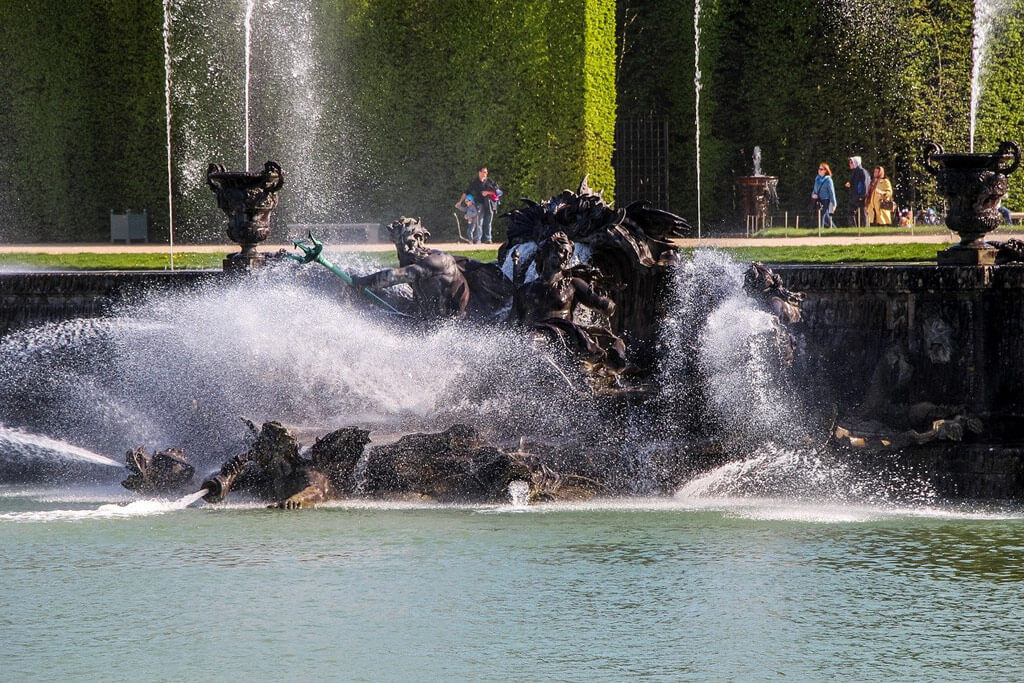
The Neptune Fountain, in the north of the Petit Parc, marks the Gardens’ perspective North-South. This basin was designed under the reign of King Louis XIV but only finished with the last sculptures under King Louis XV.
The central sculpture group represents the God Neptune and Amphitrite, while the other two sculpture groups represent Proteus and Ocean with numerous marine animals.
The Neptune Fountain is greatly admired for the number, size, and variety of water jets falling around the lead sculptures, and the historic jet finale at the end of the afternoon is the highlight of the Versailles Fountain Show.
The Neptune Fountain receives the waters from the other fountains located above. Thanks to its 99 water jets, the basin turns into a water wall, closing the perspective together with the Dragon Fountain just behind it.
Versailles Fountains Map
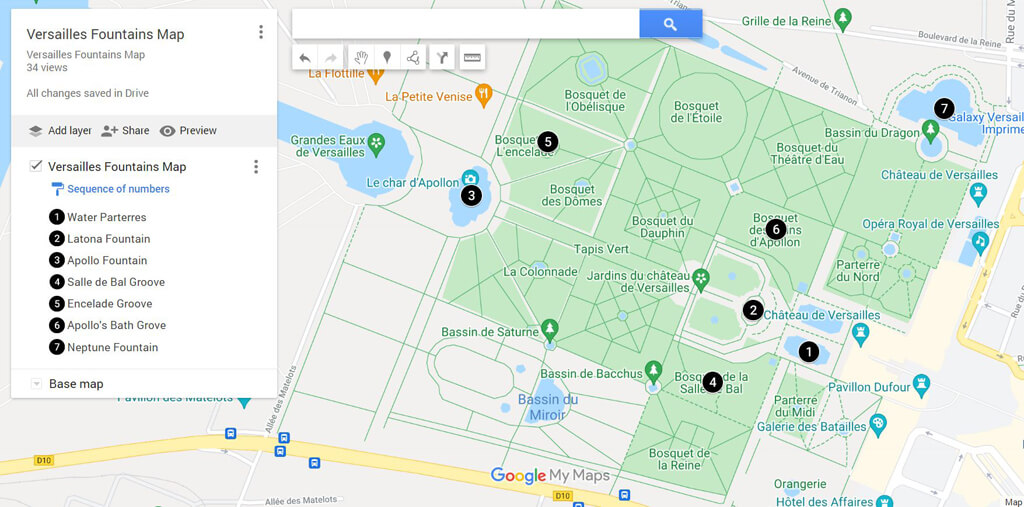
This Versailles Fountains Map shows the best Fountains of Versailles described in the previous chapter. All the Fountains of Versailles are located in the Petit Parc (the French-style garden).
Are you planning your Versailles trip last minute?
Below are some of the best Versailles tours, hotels, and more!
Book your transfer from a Paris airport to Versailles with Welcome Pickups.
Top Experiences and Tours in Versailles:
- Entry Ticket Château de Versailles, Gardens, and Estate of Trianon
- Château de Versailles Priority Entrance Ticket and Guided Tour
- Versailles Bike Tour with Château and Estate of Marie-Antoinette
Save money with the Paris Museum Pass.
Top Places to Stay in Versailles:
- Waldorf Astoria Versailles – Trianon Palace (by the Park of the Château de Versailles)
- Hotel Le Versailles (close to the Old Town and the famous Château)
- Hotel des Lys (close to Notre Dame Market and the famous Château)
» Don’t leave for Versailles without travel insurance! SafetyWing Essential plan works well for long and short trips (from 5 days up). Can also cover electronics theft through their add-on.
How Versailles Fountains Work (Water Supply)
The engineering behind the Versailles Fountains is also fascinating. Since Versailles is uphill, far from a natural water source, supplying enough water to keep the fountains running was always a major challenge. When all the fountains were running, in 1715, they consumed the totality of 69,000 muids (8 970 000 liters) of water in three hours!
This technical challenge required the help of hydraulic engineers, architects, and fountain masters who had to think about bringing water to Versailles, redistributing it to the fountains, and creating surprising water effects to arouse visitors’ wonder.
The Machine de Marly – The Eighth World Wonder
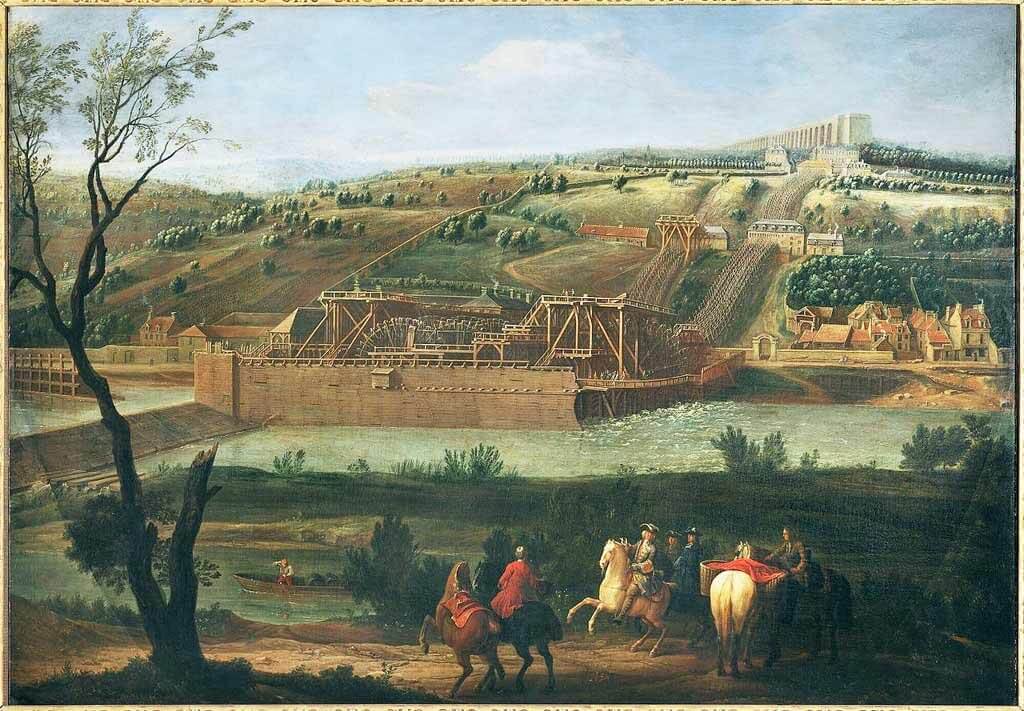
The idea of pumping water from the Seine River – the closest major river to Versailles – had existed for years. However, the 10-kilometer distance and, above all, the 142-meter elevation gain required the construction of a monumental and extremely expensive machine to bring water to Versailles’ reservoirs.
Discover the Machine de Marly, once considered the “Eighth Wonder of the World” and visited by distinguished figures such as Queen Victoria of England, the Tsar of Russia, and even the President of the United States. Today, you can still visit some of its remains.
Water Supply in Versailles Today
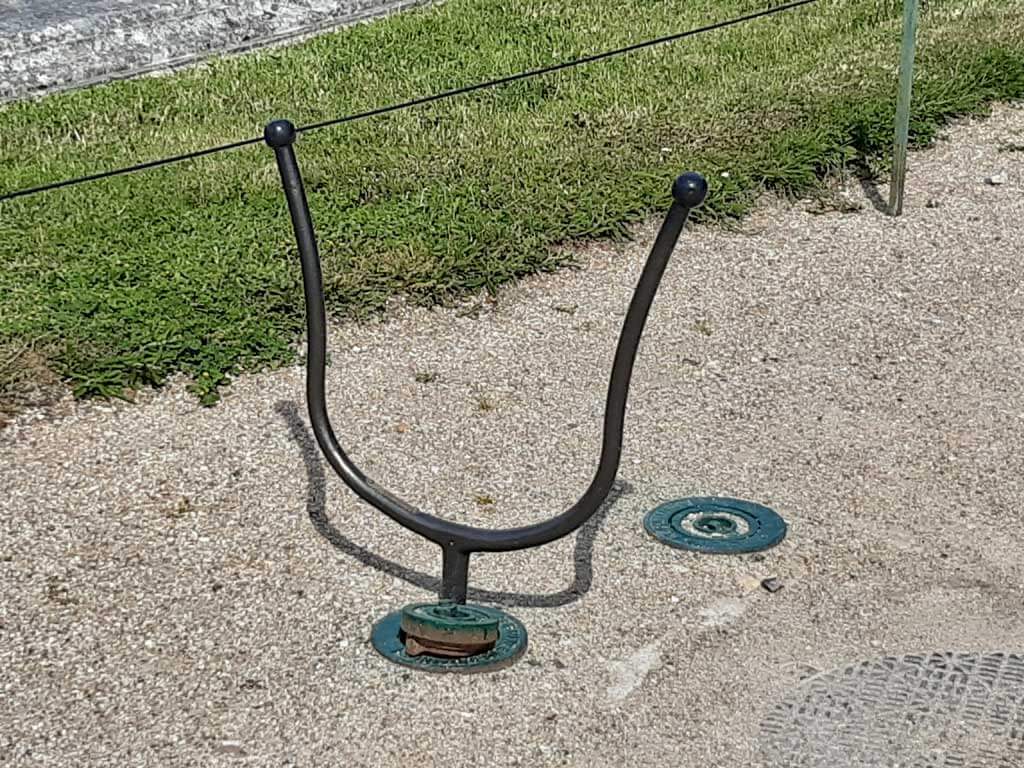
Today, the waters of Versailles Park operate in a closed circuit that consumes 4,500 m3 per hour, with 35 km of the piping system unchanged since the 17th century. A team of 13 “hydrant men” manages this circuit.
An electric pump pumps water from the Grand Canal and refills the Park’s reservoirs at the foot of the Palace. Rainwater helps complete this system. The different Fountains of Versailles are supplied with water by gravity.
Most of the fountains are still opened manually by the hydrant men. During the Versailles Fountain Show, you will see them wandering around the fountains, and they still use the same keys to open and close the fountains from the times of the Sun King!