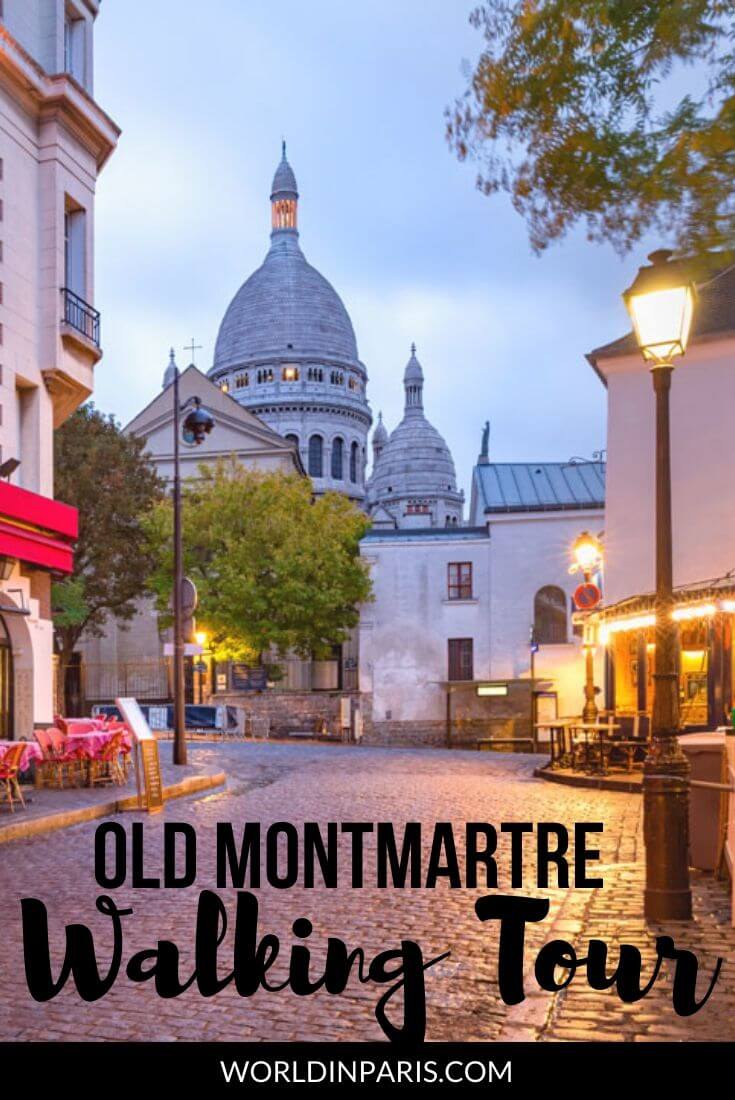
Montmartre Self-guided Walking Tour
This Montmartre walking tour takes you through the main sights of old Montmartre and the stories and legends behind it.
The Montmartre Hill in Paris, also known as La Butte by locals, is famous for its Basilica of the Sacred Heart, the Love Wall, and its panoramic view of Paris. However, it is also a gastronomic and cultural district with authentic charm, dotted with many picturesque stairs and old lampposts.
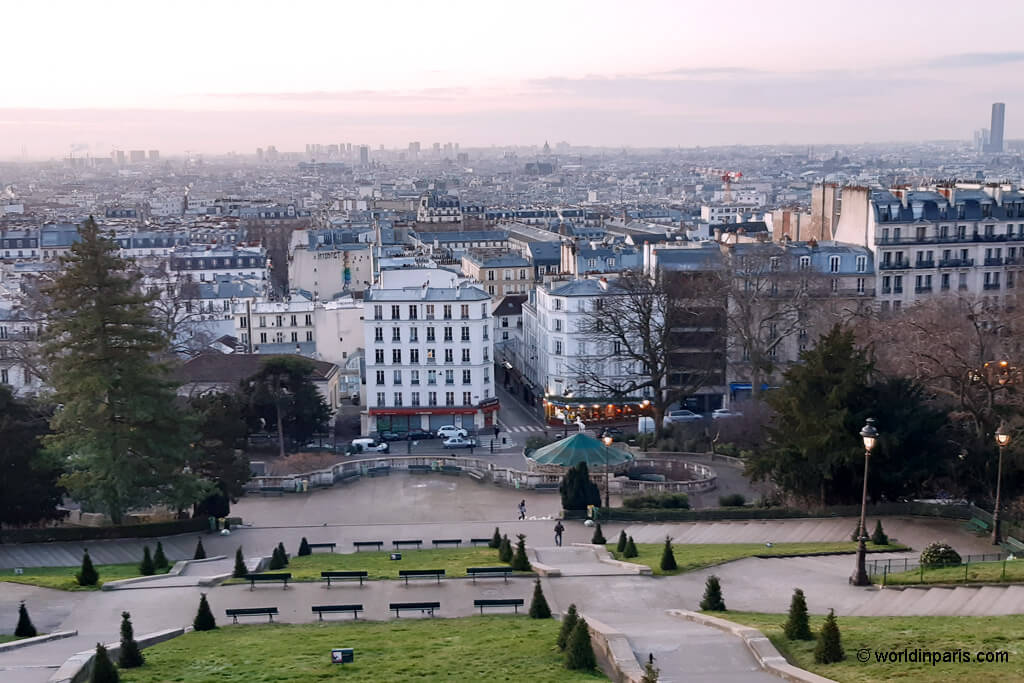
Montmartre was an independent village from its origins until 1860, when it was annexed by Paris. Drawn by the beautiful light from the heights and the low rents, artists flocked to the Butte in the 19th century. Walking through Montmartre at the time, you might have crossed paths with figures such as Corot, Géricault, Renoir, Degas, Cézanne, Max Jacob, Apollinaire, Juan Gris, Vlaminck, Braque, or even Picasso.
Needless to say, the history of this neighborhood is fascinating, and during this Montmartre self-guided walking tour you’ll discover plenty of quirky stories and fun facts along the way.
➜ Get this detailed, ad-free walking tour, including access to the Google Map and simple instructions for saving it to your phone.
Montmartre is one of the top neighborhoods to visit in Paris. I recommend including this Montmartre walking tour in the following Paris itineraries:
Montmartre Practical Information
How to Get to Montmartre?
Two metro lines serve Montmartre: line 12 (green) and line 2 (blue).
Montmartre is a hilly neighborhood with cobbled streets and many staircases. If you’re coming from the airport with a lot of luggage, I recommend booking a private transfer service like Welcome.
Where to Eat & Sleep in Montmartre?

Montmartre Walking Tour Map
Walking in Montmartre is a wonder as long as there are no tourist crowds. That’s why I recommend taking this Montmartre self-guided walking tour early in the morning, right after sunrise, when everything is still calm and quiet.
The walking tour starts in front of the Sacré-Cœur Basilica, right in the heart of Montmartre. The starting point, Sacré-Cœur, is marked as #1 on the walking tour map.
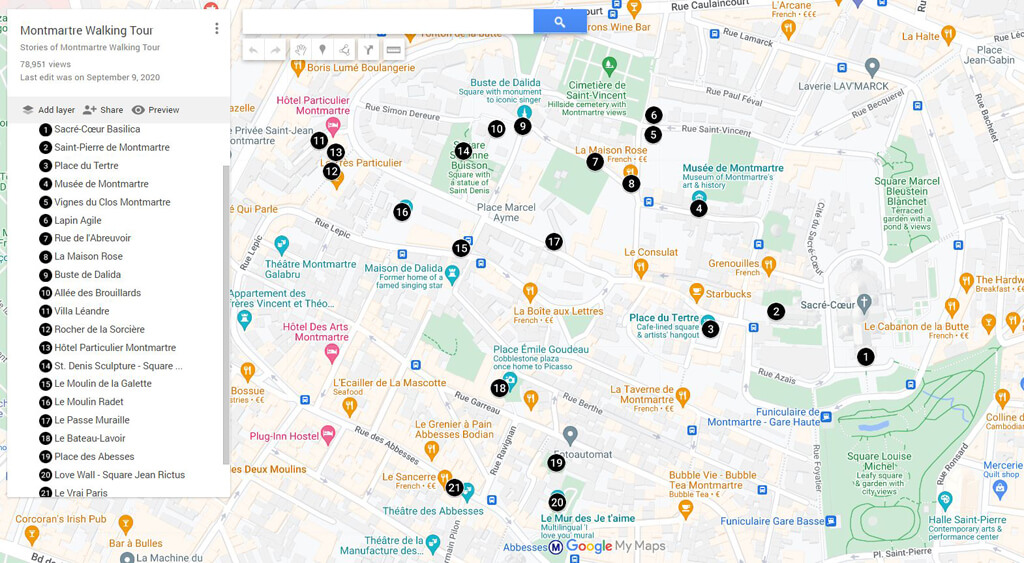
Click here to access the Montmartre walking tour map (pdf and Google Maps)
Montmartre Self-Guided Walking Tour – Itinerary
→ Read my full list of things to do in Montmartre
→ Explore Montmartre’s hidden gems
1. The Secret Behind Sacré-Coeur’s Eternal Beauty
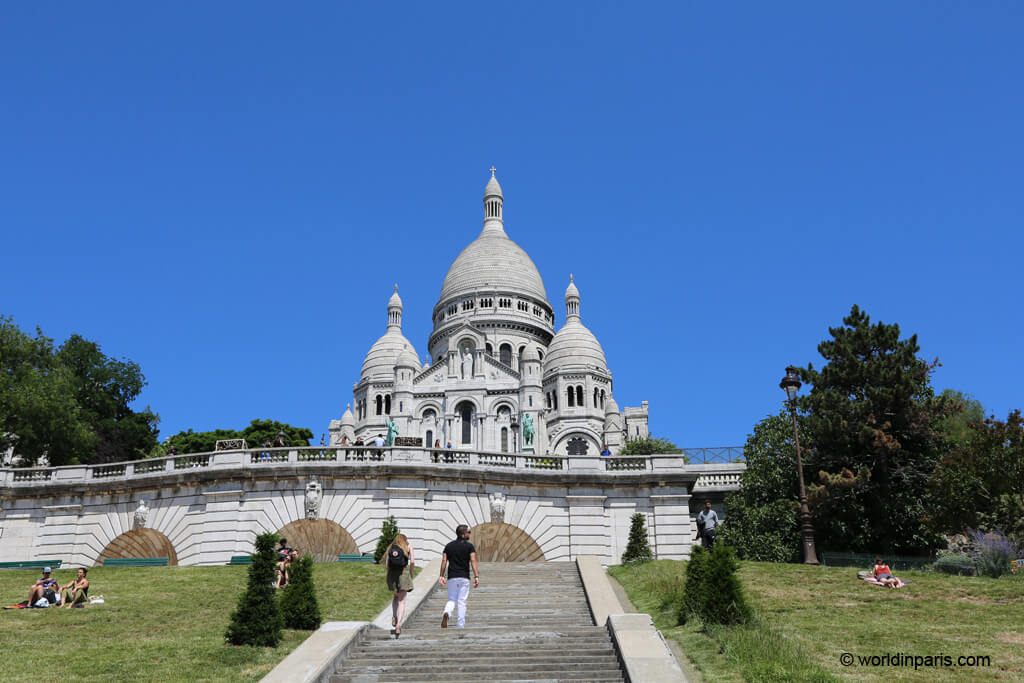
The Basilica of the Sacré-Cœur, perched atop Montmartre Hill, is a major religious landmark built at the end of the 19th century. Welcoming over ten million pilgrims and visitors each year (as of 2006), it is the second most visited monument in France, only after Notre-Dame de Paris Cathedral!
While most of Paris’s monuments darken over time and require frequent renovations, the Sacré-Cœur stands out with its distinctive, pristine white appearance. How does Montmartre’s iconic symbol remain so brilliantly white?
The Sacré-Cœur was built using Château-Landon stone, the same material used for the Alexandre III Bridge and the Arc de Triomphe. This stone has a fascinating property: when it comes into contact with water, it releases a white substance (called cullet) that flows down the walls and hardens in the sun. This is the Sacré-Cœur’s secret to eternal youth and the reason it has never needed renovation!
2. Saint-Pierre Church and the Legend of Saint-Denis
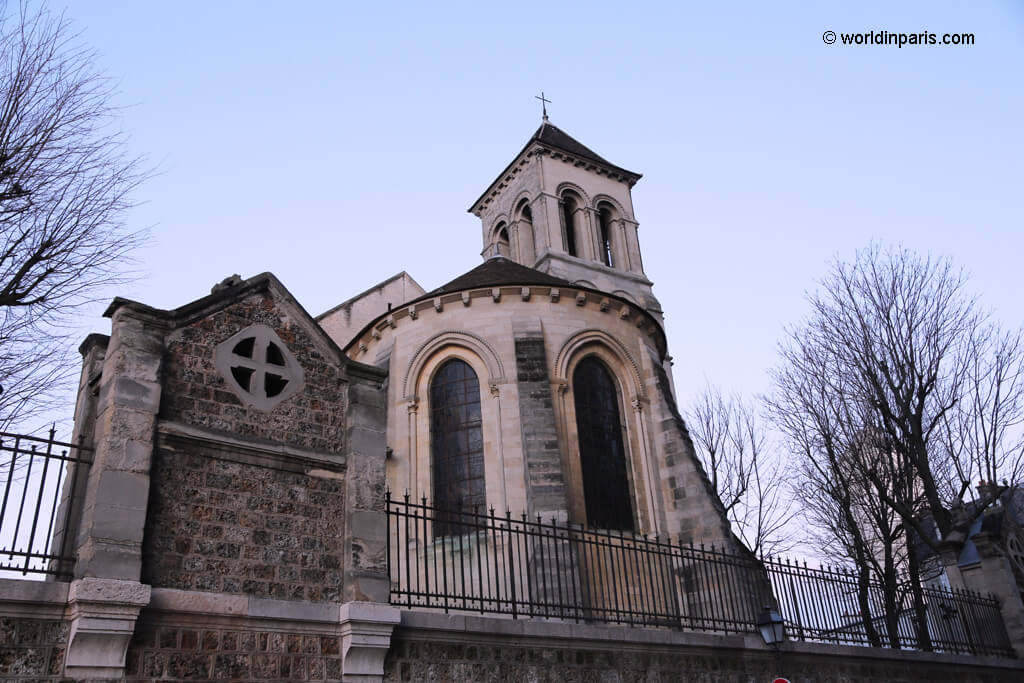
The next stop on our Montmartre walking tour is 2 rue du Mont-Cenis, home to one of the oldest churches in Paris, built in the Middle Ages.
Saint-Pierre Church is linked to the legend of Saint-Denis. The saint was martyred on the Butte-Montmartre (Mount of Martyrs), which later became a sacred site for Christians.
Before the Middle Ages, a temple dedicated to the Roman god Mars stood on the site of today’s church. In the 5th century, this temple was transformed into a Merovingian chapel, surrounded by a cemetery around which a small hamlet gradually developed.
The site underwent a major transformation in the 12th century. In 1133, the Merovingian chapel was ceded to King Louis VI and Queen Adelaide of Savoy, who decided to establish a Royal Abbey of Benedictine nuns there. By 1147, the abbey had replaced the old chapel with a new Romanesque church (Saint-Pierre Church) and added additional buildings around it.
During the upheavals of the French Revolution, Saint-Pierre Church was spared while the rest of the religious buildings were completely demolished. In 1794, it was converted into a Temple of Reason, and later served as a tower for Claude Chappe’s first aerial telegraph. The church was finally restored between 1899 and 1905.
The church’s interior still shows its original Romanesque style, with the exception of the Gothic rib vault and some Gallo-Roman pieces recycled from the Merovingian chapel. Next to the church is the charming Calvary Cemetery, the oldest cemetery in Paris! The cemetery is only open to the public on a few occasions.
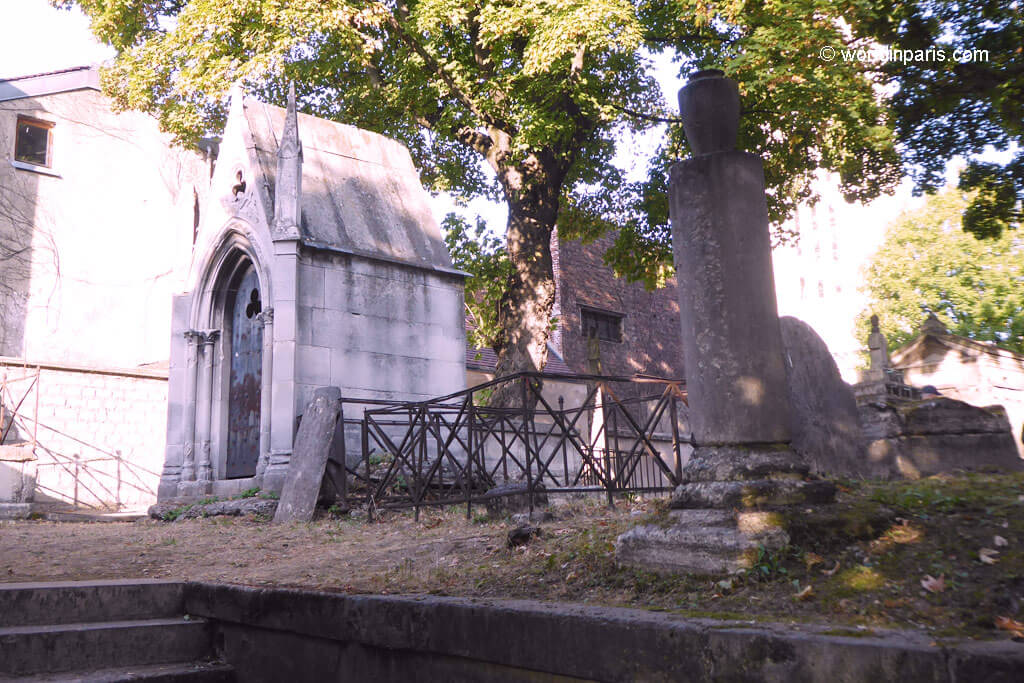
The hillock, topped by Saint-Pierre Church and its public square, Place du Tertre, has long kept its village atmosphere. While the village’s fame has been widely exploited – you only have to look at the souvenir shops – and often distorted, the church still feels picturesque, with its clear lines and open views.
3. Place du Tertre and the Artists of Montmartre
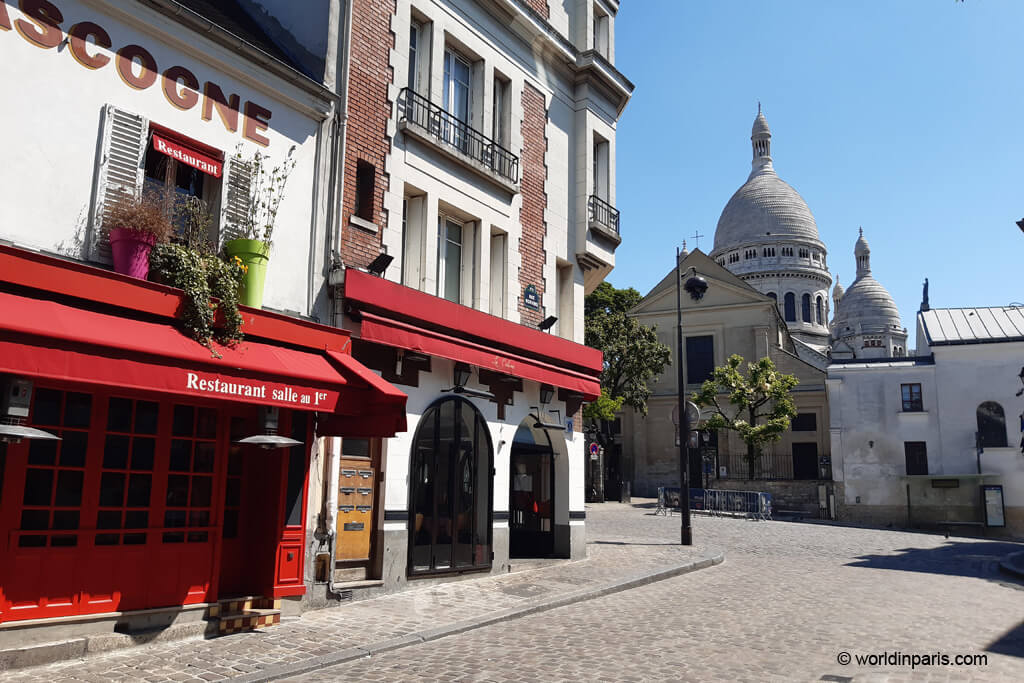
Place du Tertre is the beating heart of Montmartre. This picturesque square, framed by 3- to 4-story 18th-century buildings and offering a beautiful view of the Sacré-Cœur, was once the center of the old Montmartre village.
The village of Montmartre was officially founded in 1790, with its first town hall located at 3 Place du Tertre. In the same square, a plaque on the façade of house #21 commemorates the arrival of the first automobile on Christmas Eve 1898, driven by Louis Renault. This historic moment marked the beginning of the automobile industry in France!
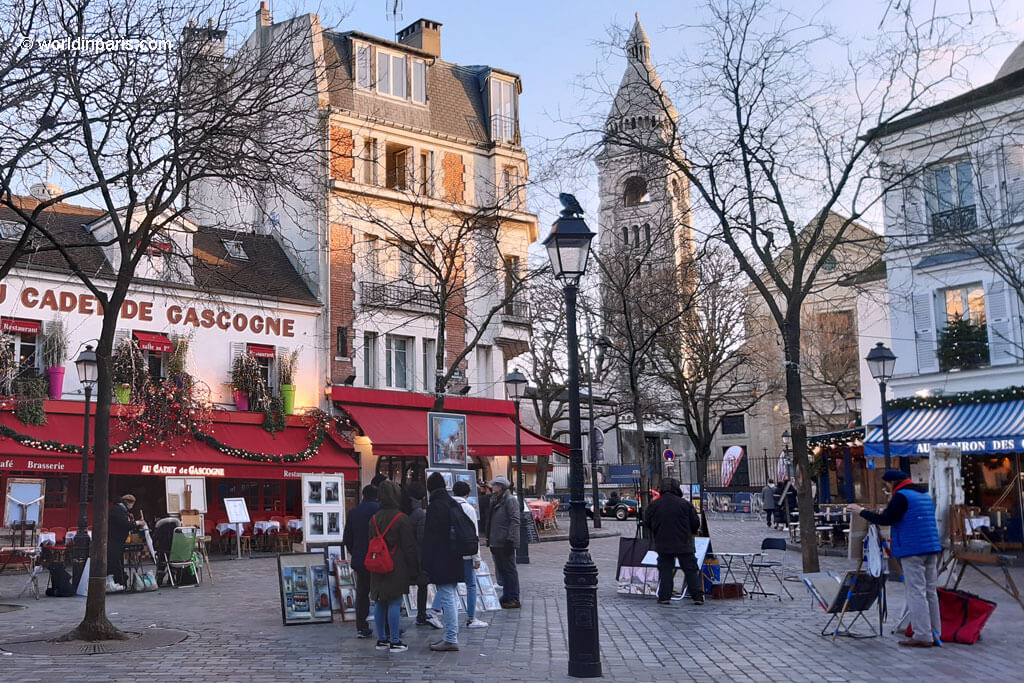
The local art trade has long been a tradition on the slopes of bohemian Montmartre, dating back to around 1890 when famous artists such as Modigliani, Utrillo, Valadon, and Picasso made it their home. Today, the City Council grants 140 licenses each year for a one-square-meter stall in Place du Tertre, shared by two artists on alternating schedules.
Let’s take Rue Novins, the old village’s main street. This street was referred to in the 11th century as the cart road that goes from Montmartre to Paris. The even side is lined up with 18th-century townhouses with wooden shutters, wrought iron window railings, and dormers.
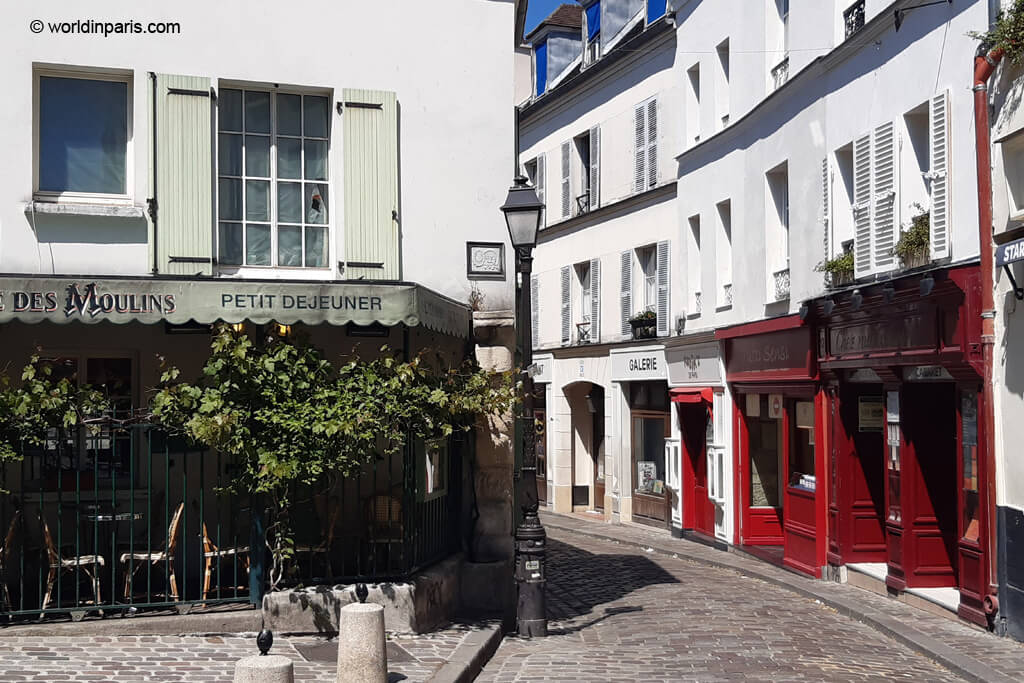
At #6, you’ll find the Mère Catherine Restaurant, a cozy bistro founded in 1793. It replaced a 15th-century presbytery and quickly became a favorite spot for locals to drink and play wooden billiards. An old postcard even shows the bistro with its pool players posing proudly in front.
Now, let’s turn left onto Rue des Saules, which descends the north side of the hill. But first, don’t forget to snap a photo of Le Consulat (18 Rue Norvins), one of Montmartre’s most Instagrammable cafés.
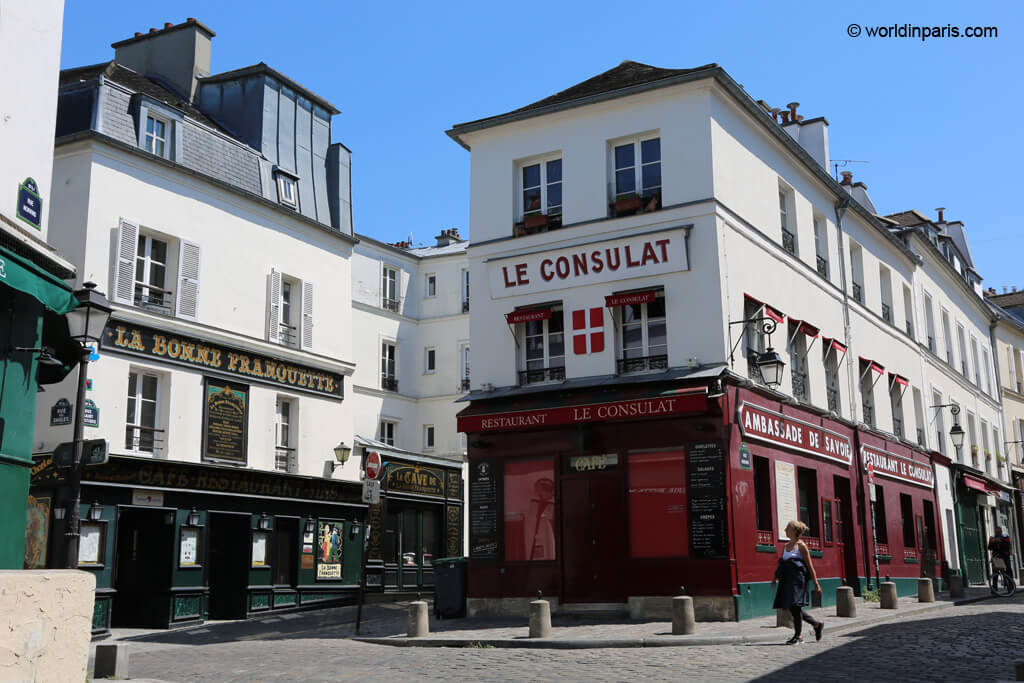
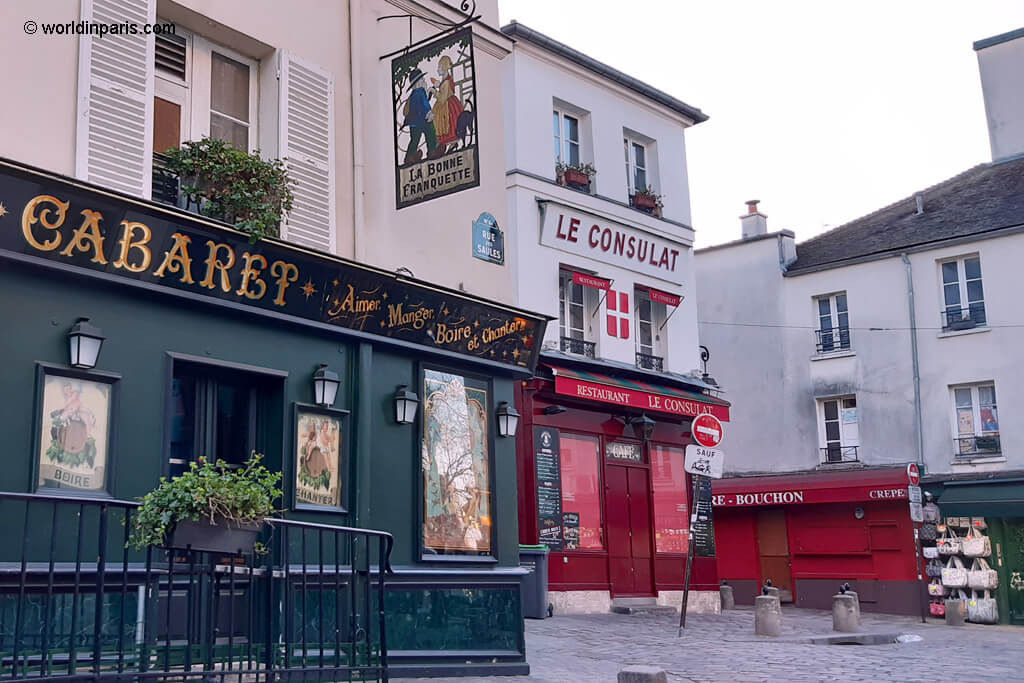
In the 15th century, Rue des Saules was known as the Chemin de la Saussaie, winding through swampy lands where willow trees (saules in French) grew. On this walking tour of Montmartre, you’ll take the second intersection with Rue Cortot.
4. A Hothouse for Artists
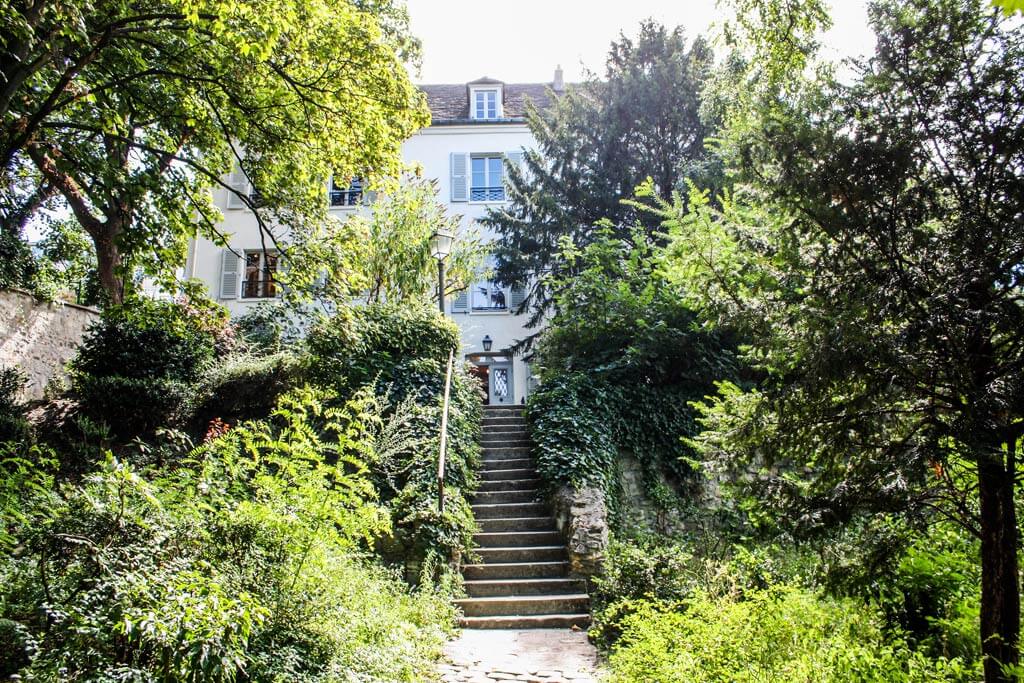
Considered the oldest house in Montmartre and once the art studio of many artists, Le Musée de Montmartre (12 rue Cortot) is tucked away on a quiet street. Although just a stone’s throw from the bustling Sacré-Cœur, it feels like a world apart.
Perhaps its most illustrious guest was Auguste Renoir, who in 1876 rented a studio and stables in the left wing to work on his extra-large painting Le Moulin de la Galette.
Today, the museum rarely crowded offers fascinating collections on the village’s history; the section on Montmartre’s cabarets is especially interesting. The setting is incredibly romantic, and from the exterior spaces, you are treated to excellent views over Montmartre’s historic vineyard. Be sure to enjoy a drink at the charming garden café, immortalized by artists like Renoir in The Swing.
After visiting the Musée de Montmartre, turn left onto Rue du Mont-Cenis. In the 12th century, this steep path – accessible only to pedestrians and mules – linked the Abbey of Saint-Denis to the Abbey of Montmartre via the northern slope of the hill. Next, turn left onto Rue Saint-Vincent, a street with a quaint, provincial feel, and stop to admire Montmartre’s famous vineyards.
5. The Wine of Montmartre
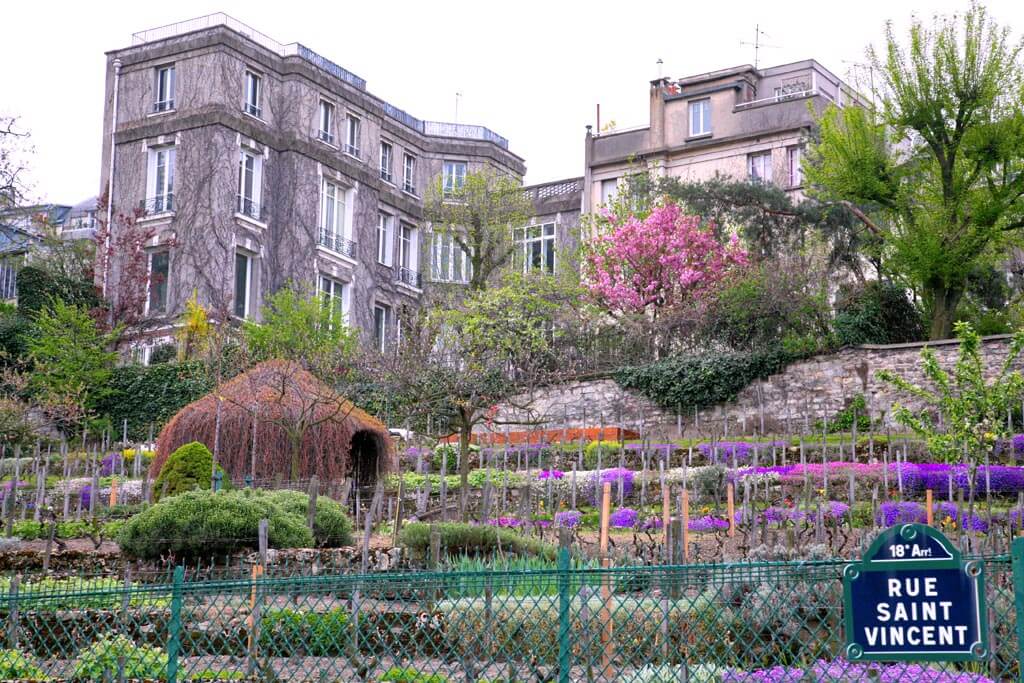
The Montmartre vineyards on Rue Saint-Vincent, officially known as Clos Montmartre, preserve the memory and tradition of the many vineyards in Paris that once flourished across the city.
In the 16th century, Montmartre – then a village outside Paris – was mainly home to laborers and winegrowers, with vineyards stretched from the top of the Butte down to the surrounding plains.
By the 17th century, Montmartre wine was produced in small quantities and reserved for local consumption. A popular saying of the time poked fun at its quality and effects: “It is the wine from Montmartre – who drinks a pint, pisses a quarter of it!”
The vineyard on Rue Saint-Vincent was replanted in 1933 to prevent construction on the grounds of a former, abandoned open-air dance hall called Le Parc de la Belle Gabrielle. Today, it features the most classic varieties from France’s wine regions enhanced by decorative plantings.
Public access is not permitted, except for exceptional occasions, such as the Fête des Jardins and Montmartre’s Harvest Festival, both held in the autumn.
6. Cabaret Life in Montmartre
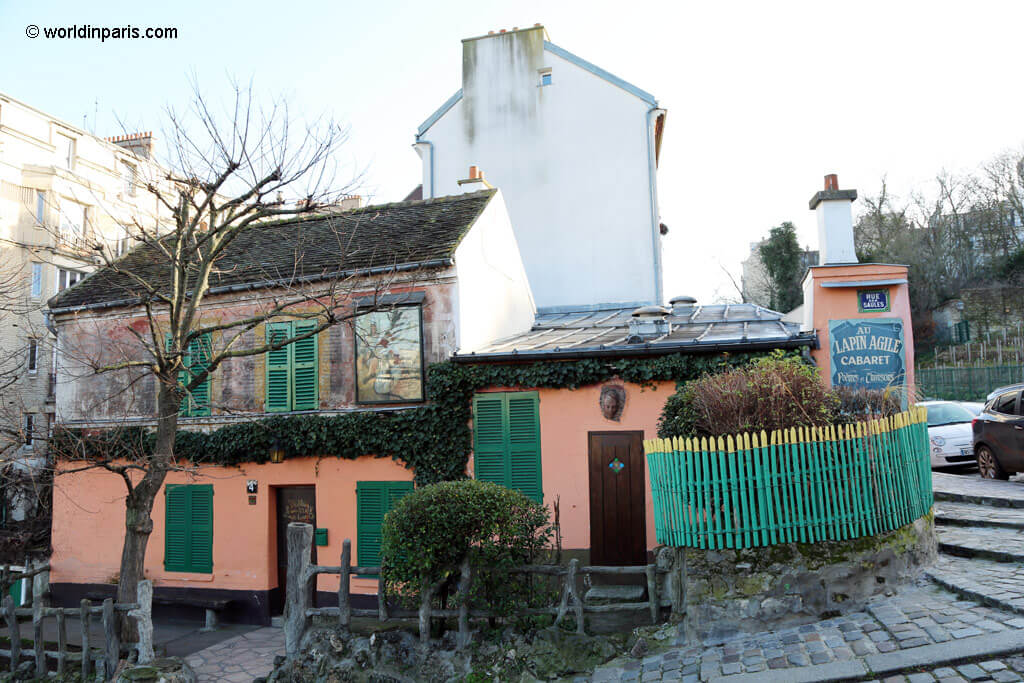
Le Lapin Agile (22 Rue des Saules) is a traditional cabaret established in the second half of the 19th century. Back in 1886, it was a restaurant run by Adèle Decerf, whose specialty was sautéed rabbit – hence the name.
In the early 20th century, this charming village-style house became the heart of Montmartre’s bohemian life. Writers, artists, and intellectuals such as Dorgelès, Carco, Renoir, Courteline, Forain, Picasso, Fargue, Utrillo, Van Gogh, and Clemenceau were frequent guests. Picasso, in particular, enjoyed sitting on the terrace beneath the giant acacia with his dog, Frika.
Today, Le Lapin Agile has preserved the original warm and lively atmosphere of the historic cabarets. You can read more about it, along with other Parisian cabarets, in my quick guide to the Cabarets of Paris.
7. Rue de l’Abrevoir
Let’s walk up Rue des Saules, then turn right onto Rue de l’Abrevoir. In the 19th century, Montmartre’s residents followed this path to fetch drinking water and to lead horses and cattle to the watering trough (abrevoir in French) that once stood on this street.
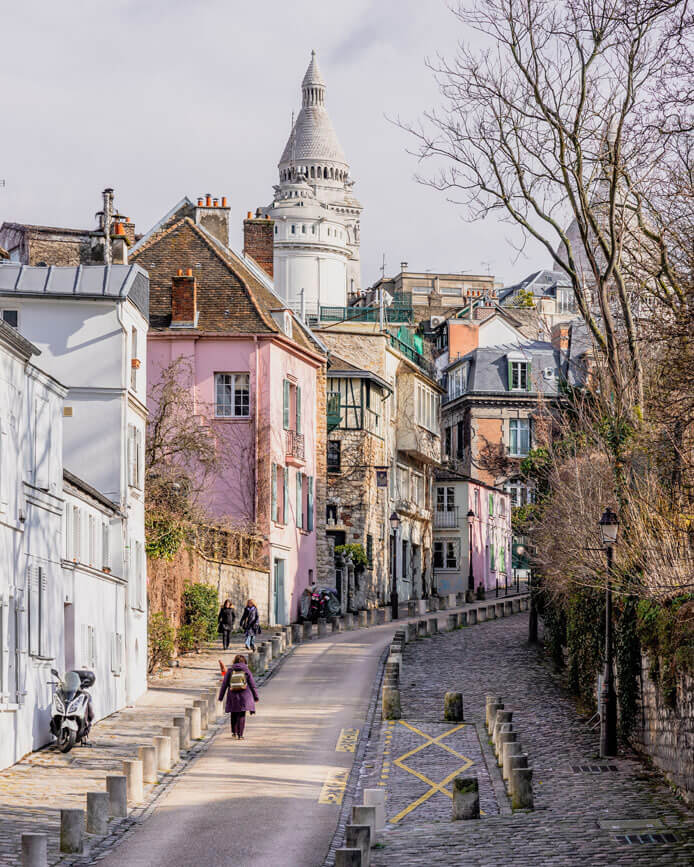
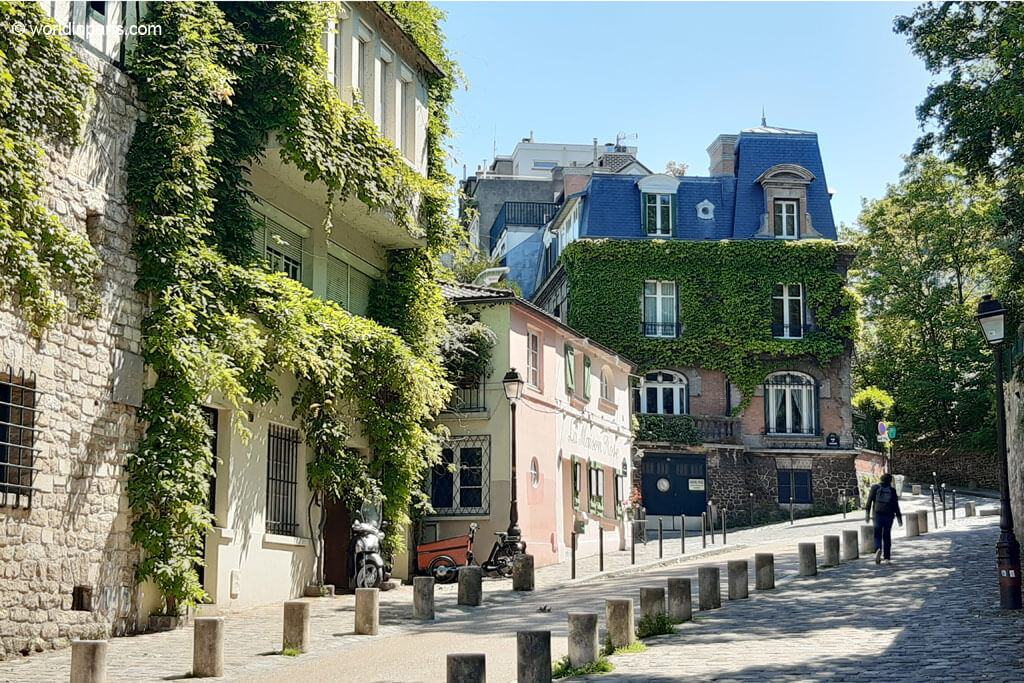
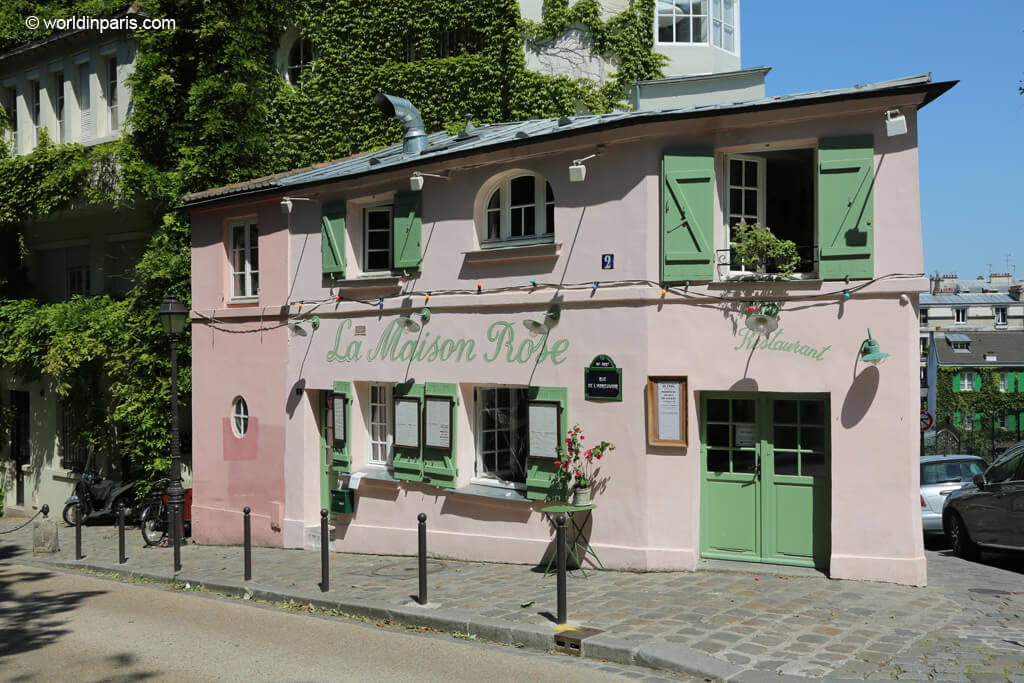
The 19th-century house at #15 marks the site of that old trough. At #2, the charming Maison Rose (point #8 on the Montmartre walking tour map), famously painted by Maurice Utrillo, has become a legendary Montmartre landmark and one of the most photographed spots in Paris.
9. Dalida’s Tragic Life
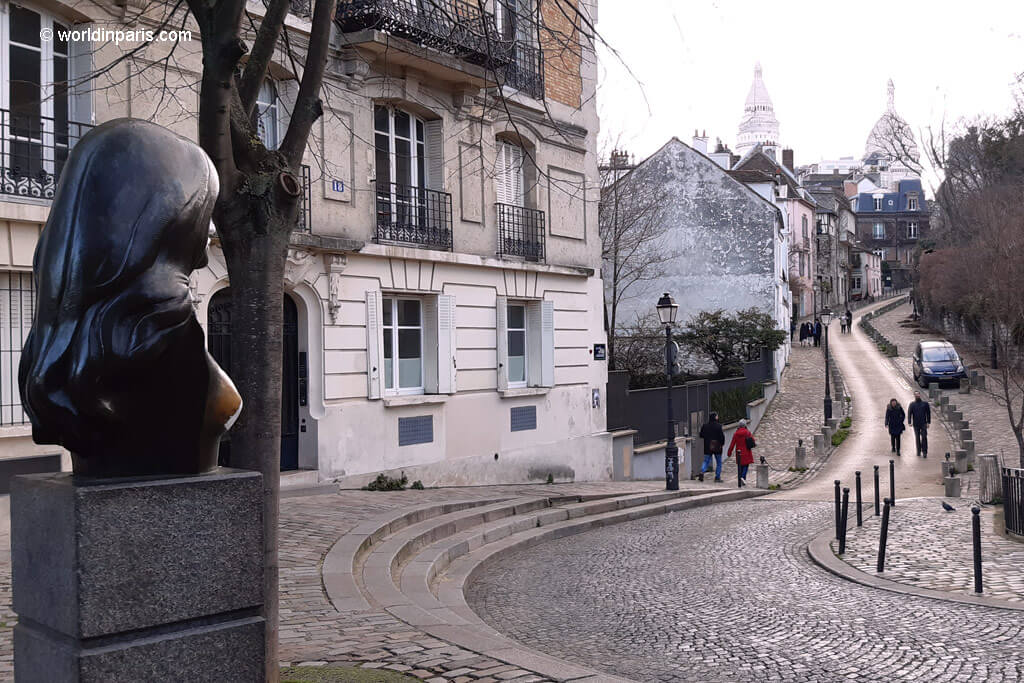
This Montmartre tour stops for a break at Place Dalida, a small square with one of the most beautiful views of Montmartre. You can see Rue de l’Abrevoir going up toward the Sacré-Cœur. The square is named after Dalida, a famous singer who lived in Montmartre and became a French pop icon.
Dalida moved to Montmartre in 1962 and bought a house at 11 bis Rue d’Orchampt. She loved Montmartre and helped in protecting the Butte.
Weakened by the loss of her former partners – many of whom had died by suicide – as well as her friend Mike Brant, the singer Dalida died on May 2, 1987, leaving France heartbroken. Her last words were reportedly, “Life is unbearable to me, please forgive me.” Dalida took her own life in her home and was buried in Montmartre Cemetery (not included in this walking tour).
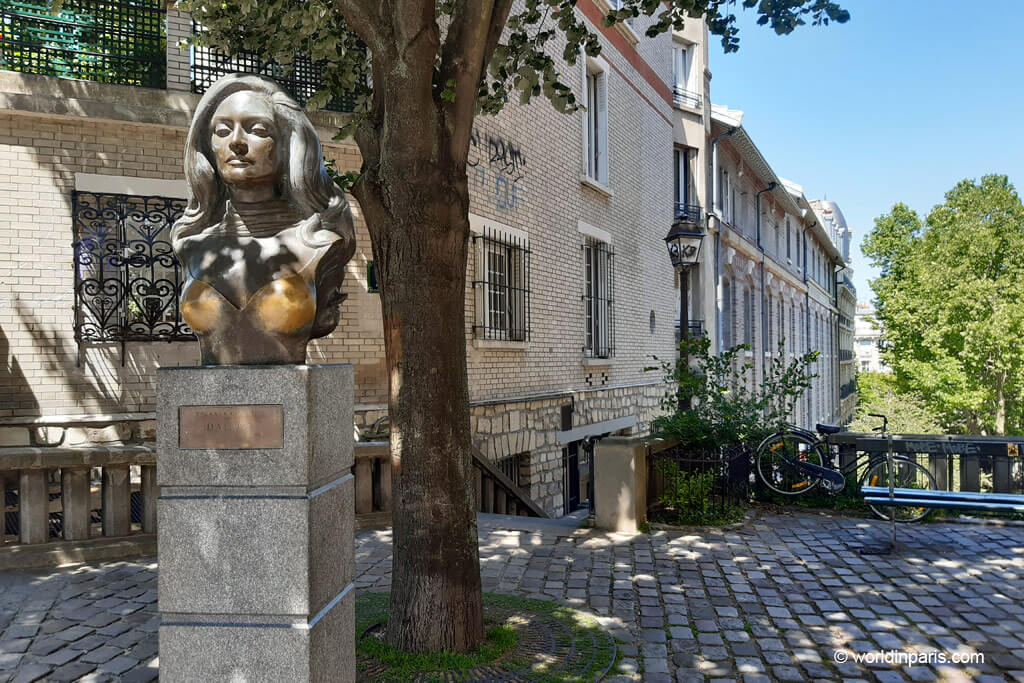
You may notice that the bust of Dalida is particularly shiny in some areas – especially on the chest – making some visitors wonder why. There is no special reason for this (unlike Giulietta, Dalida does not bring luck, or love – but rather the opposite, considering her romantic life…). Please be respectful of this great artist and proud Montmartroise.
10. L’Allée des Brouillards
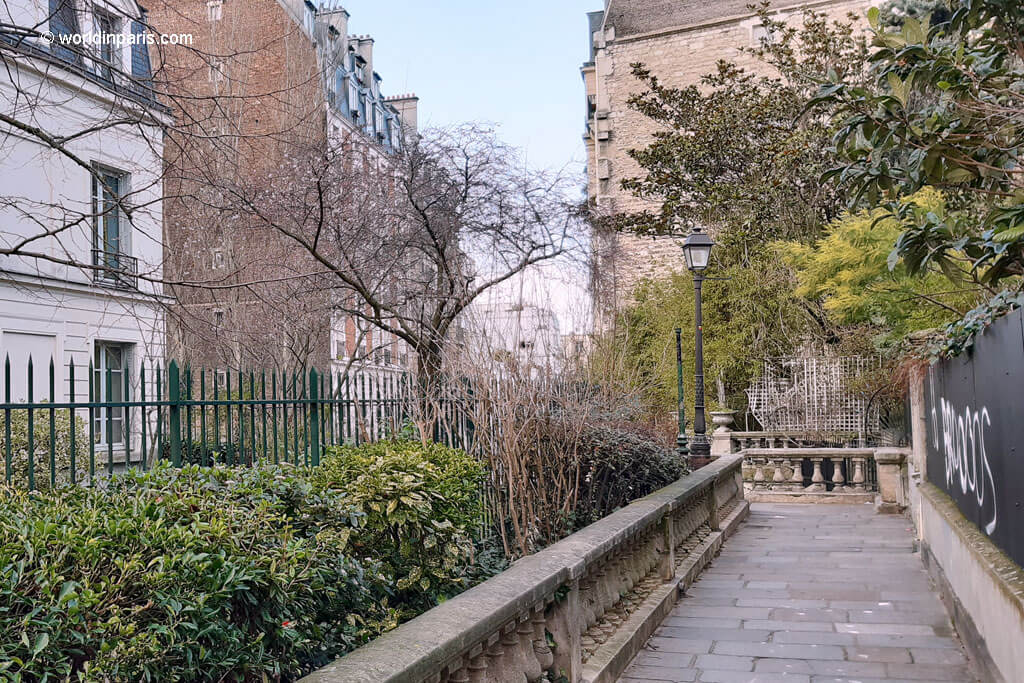
The romantic Allée des Brouillards is one of the few places in Montmartre that still transports us back to its village past. Renoir and his family lived at #8 from 1890 to 1897, and his son Jean, later a famous film director, was born here in 1894.
On the right, behind a lawn, rises the charming Château des Brouillards, in front of which many painters once set up their easels.
In the 17th century, a modest farm and mill – the Moulin des Brouillards – stood here, pressing Montmartre’s wine. The alley’s name, Mists Alley, may come from the morning fog created by nearby springs – or more festively, from the vapors of the wine.
In 1764, the hovel and the ruined mill were sold to a lawyer in the French Parliament who built a beautiful house, the Château des Brouillards, parts of which you can still see today on the left side. The Château comprised a farmyard, orchard, cellars, and wells, and it was a pleasant country residence.
Restoration began in the 1920s to save the Château from demolition, and today it welcomes walkers and Montmartre lovers seeking a glimpse of the Butte’s picturesque, rural past.
11. Villa Léandre
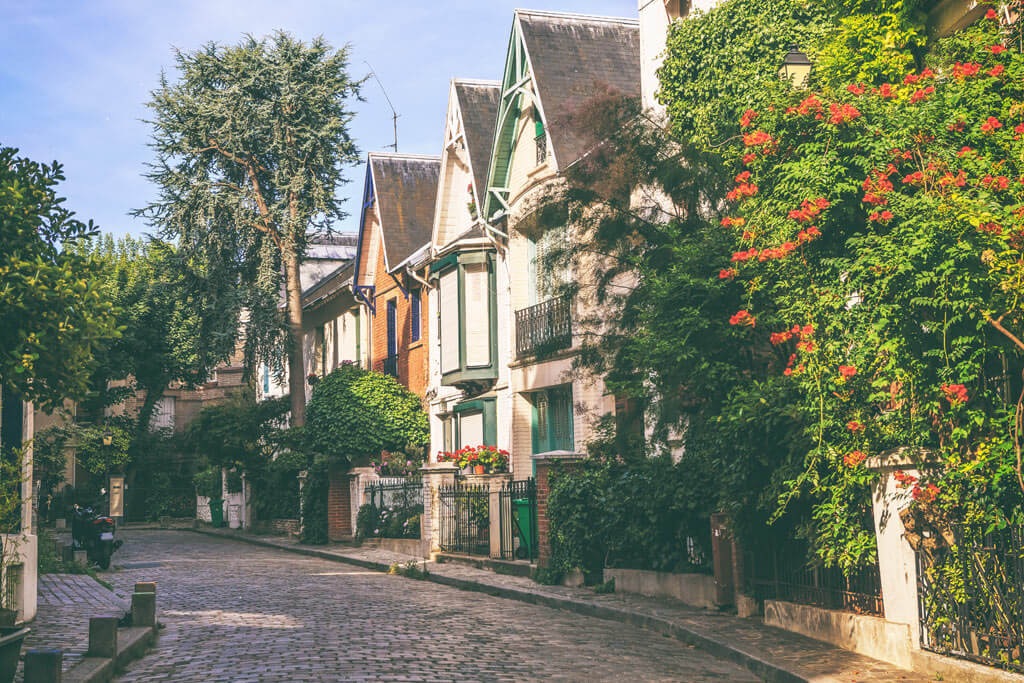
This walking tour now takes Rue Simon-Dereure, then turns left onto Avenue Junot. Before walking uphill, stop at the charming Villa Léandre for a few photos.
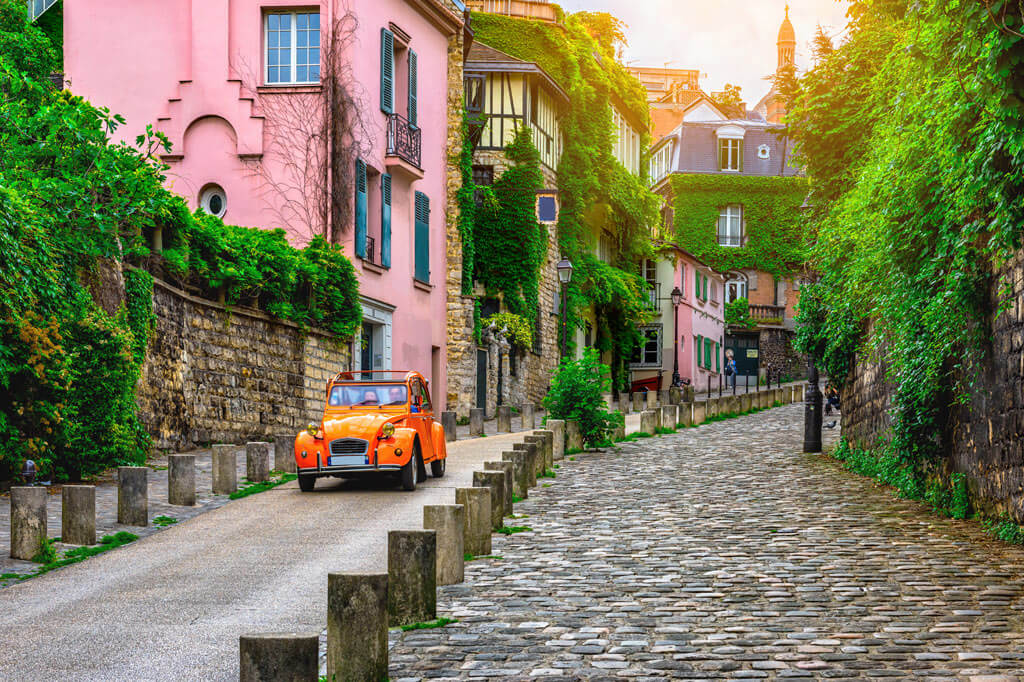
Created in 1926, Villa Léandre was first called Villa Junot, after the larger street nearby. Its current name comes from the caricature artist Charles Léandre, who had his studio close by. The small cobbled cul-de-sac is lined with colorful Anglo-Normand style houses, covered in climbing plants and with little front gardens.
12. The Mysterious Witch’s Rock
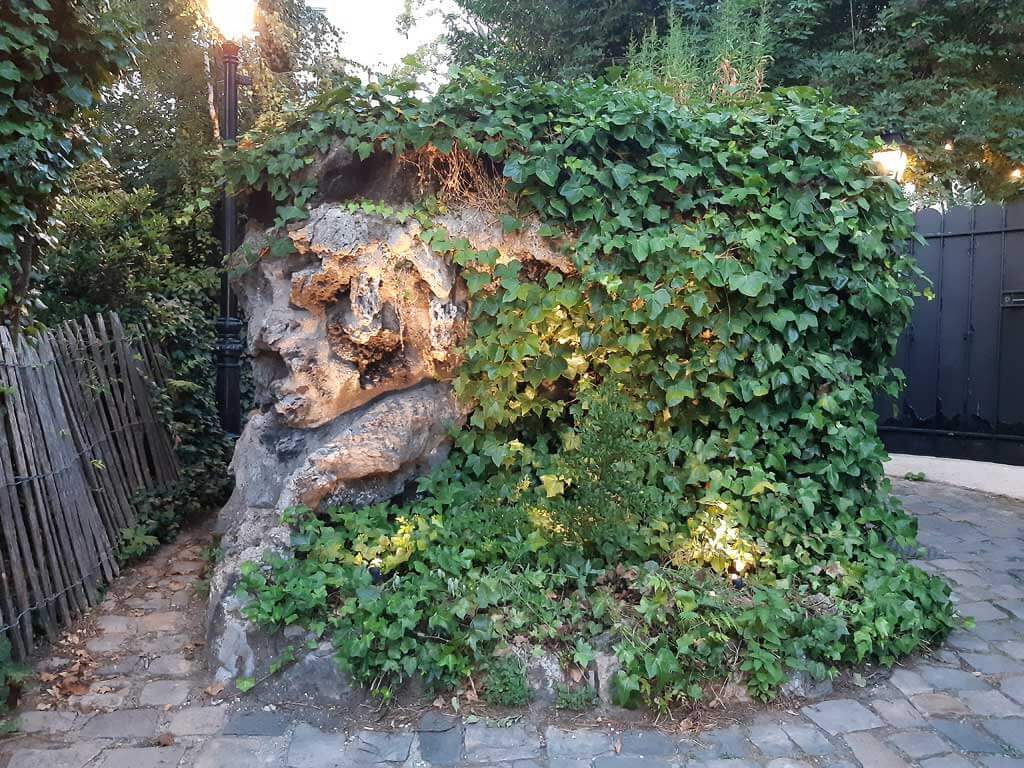
The Passage de la Sorcière, accessible from 23 Avenue Junot or 65 Rue Lepic, is one of Montmartre’s most charming little alleys and it comes with a few legends!
At its center stands La Roche de la Sorcière (the Witch’s Rock). Locals once believed it was a meteorite and a magical tool used by a witch who lived behind the intriguing portal nearby.
In reality, the rock is the remains of an old fountain called La Sourcière (“the spring”), and over time the name morphed into Passage de la Sorcière (“passage of the witch”). Stories about the rock and its mysterious powers have been passed down for generations.
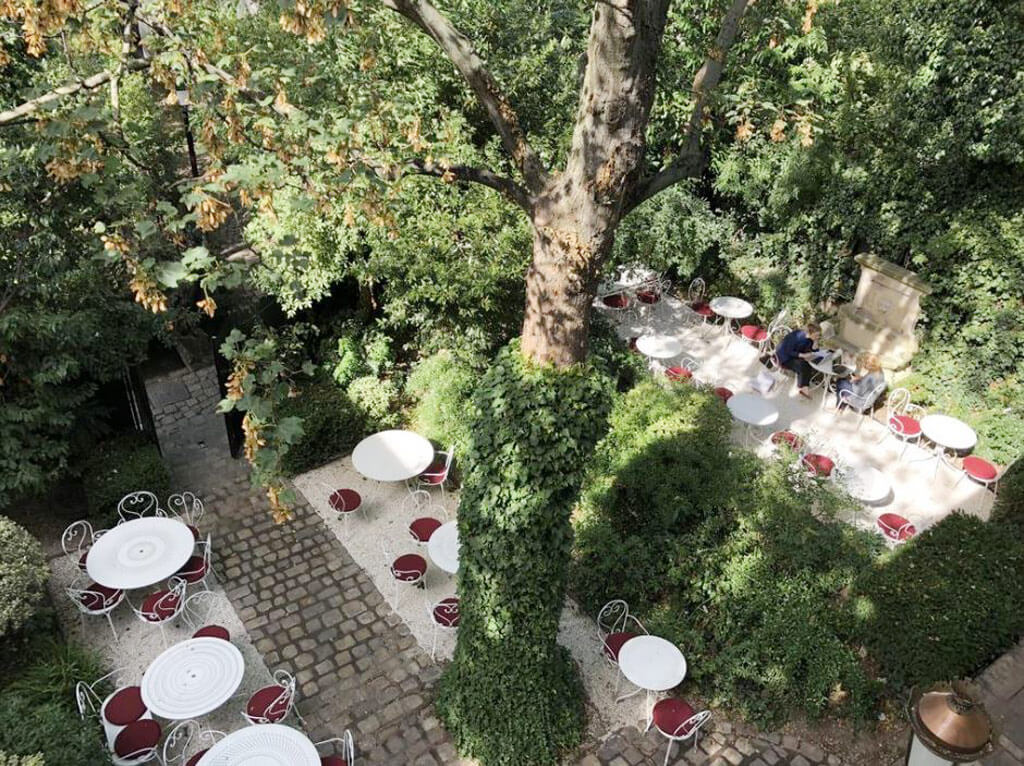
Today, the witch’s former mansion is the elegant Hôtel Particulier Montmartre (point #13 on the tour map), one of Paris’s most romantic addresses, with a beautiful bar. As the alley is now private, this hotel is the only way to see the Witch’s Rock up close.
14. The Legend of Saint-Denis
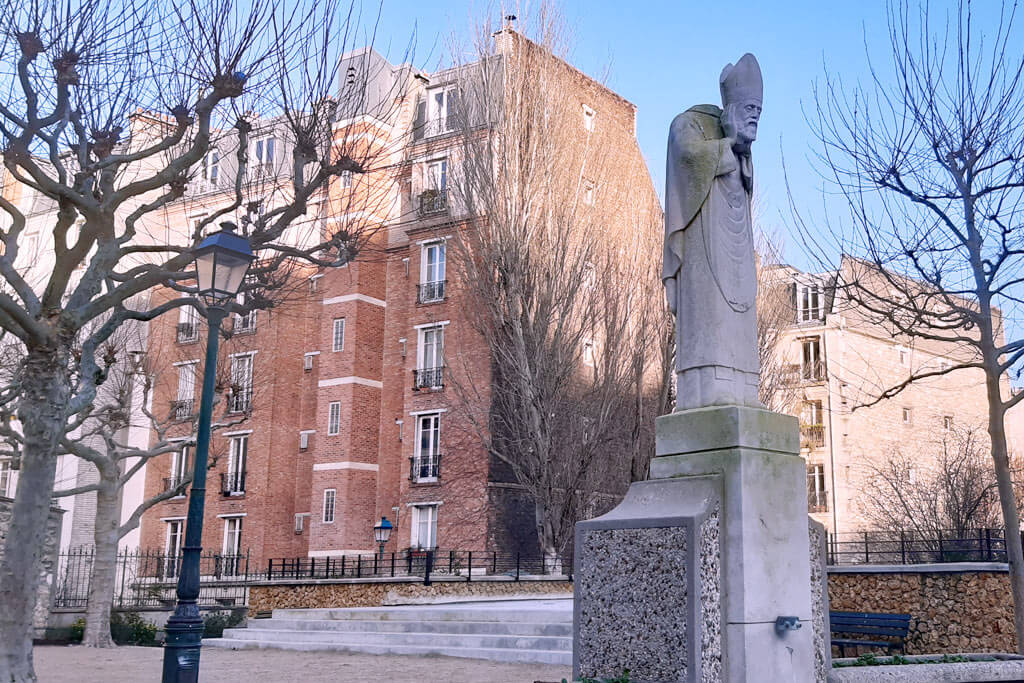
Back on Avenue Junot, this Montmartre walking tour stops at Square Suzanne-Buisson, dominated by the statue of Saint-Denis. Saint-Denis was the first Christian bishop of Paris in Roman times and helped spread Christianity among the Parisians. He was martyred and beheaded along with his companions Rustique and Éleuthère during Emperor Valerian’s persecutions.
Legend says that after he was beheaded (around 275), Saint-Denis washed his severed head in a spring that flowed here until the early 19th century, before continuing on to the site where he was buried – the current crypt of the Basilica of Saint-Denis. Because of this, the basilica later became the burial place for many French kings, who wanted to rest near the saint’s remains.
15. The Windmills of Montmartre
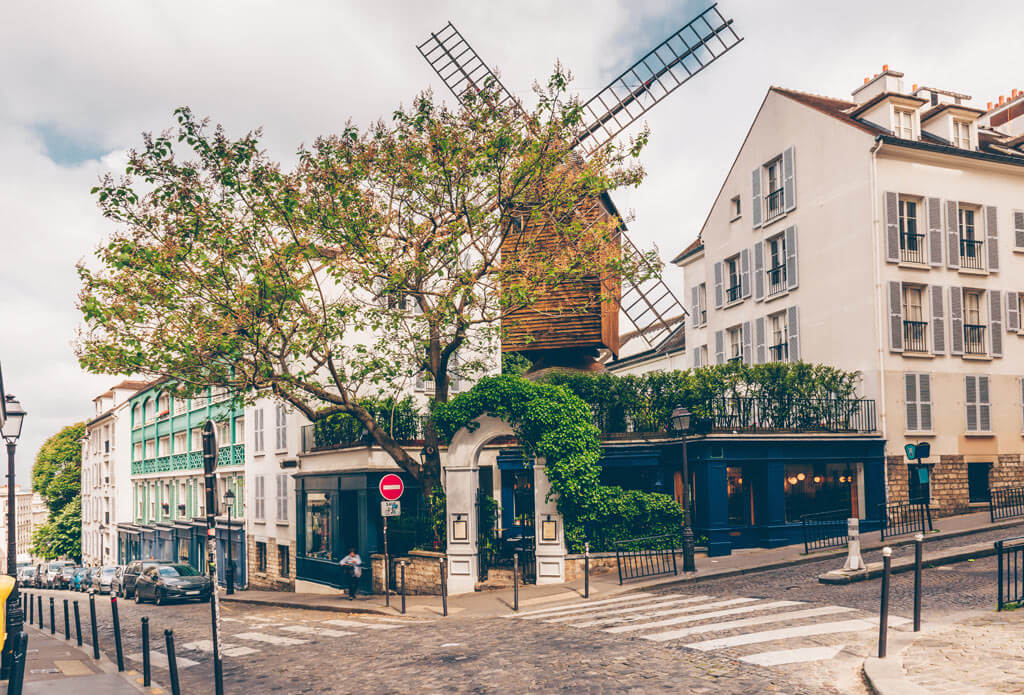
Back on Avenue Junot, at #3, you can catch a glimpse of the Moulin de la Blute-Fin, built around 1622. Of the thirteen windmills that once crowned Montmartre, only this one and the Moulin Radet (at the corner of Rue Girardon and Rue Lepic, #16 on the map) remain. These mills were used to grind wheat, press grapes, and crush materials for local factories.
In the 1870s, these two windmills, their gardens, and a small farm became the site of the popular Bal du Moulin de la Galette, a lively dance hall. Every Sunday, Parisians flocked here to dance the polka, quadrille, and French cancan.
By the 1900s, the Moulin de la Galette had become a favorite spot for painters, designers, and actors alike. Artists such as Renoir, Toulouse-Lautrec, and Picasso immortalized its lively atmosphere in their paintings.
17. The Fable of the Passe-Murailles
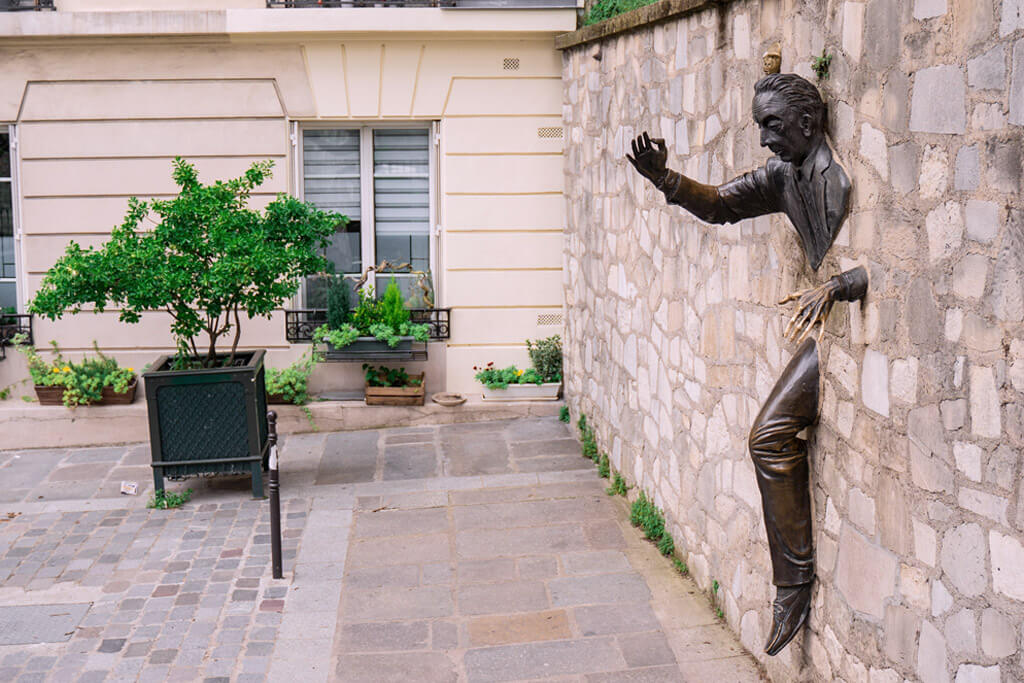
Continue walking up Avenue Junot to Place Marcel-Aymé, a beautiful spot, especially during cherry blossom season. Here you’ll see a man in bronze breaking through a wall.
This sculpture, Le Passe-Muraille, is inspired by a short story by Marcel Aymé written in 1943: “An excellent man named Dutilleul had the extraordinary gift of walking through walls without any trouble.” It’s a charming tribute to the writer, who lived in Montmartre for 40 years.
From there, return to the junction with Rue Girardon and take Rue d’Orchampt down to Place Émile Goudeau. Along the way, you can spot Dalida’s house at 11bis Rue d’Orchampt and some picturesque artist studios.
18. Picasso and Le Bateau Lavoir
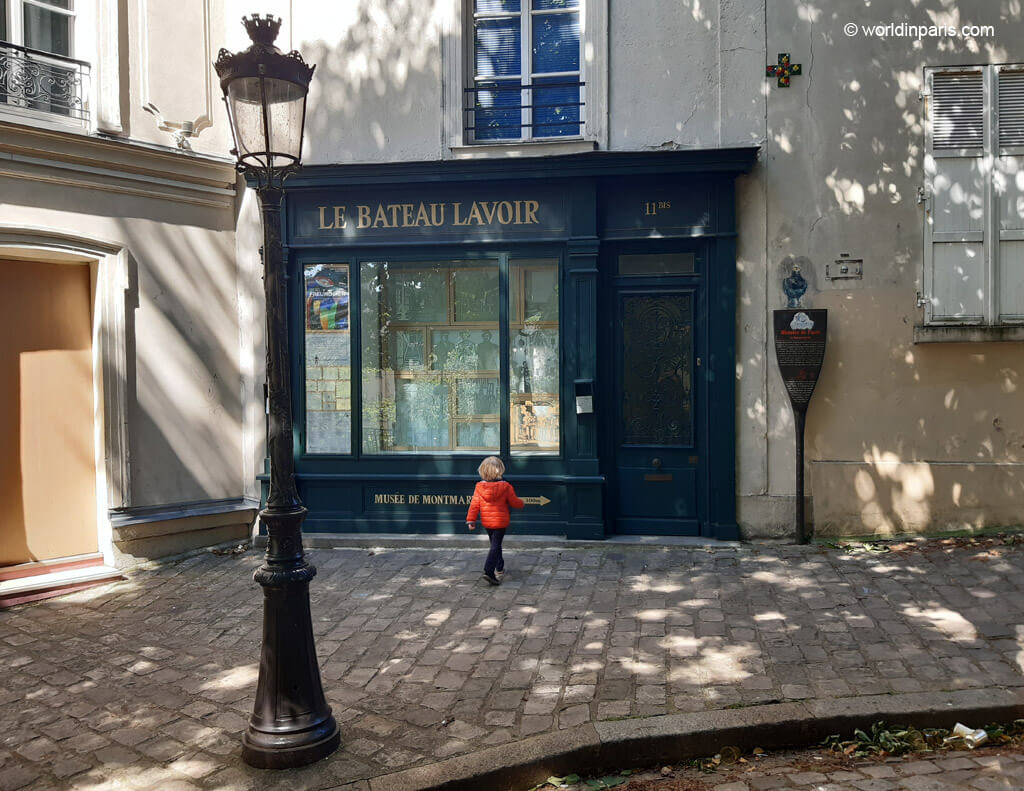
Facing Place Émile Goudeau, the Bateau-Lavoir was once a ballroom and later a piano factory, before being divided into twenty small workshops for artists. The building had no heating and only one water point.
Many of the great artists of the time passed through its cramped studios: Le Douanier Rousseau, Amedeo Modigliani, Henri Matisse, Georges Braque, Guillaume Apollinaire, Jean Cocteau, and more.
Pablo Picasso arrived on the Butte at 19 and set up a workshop at the Bateau-Lavoir in 1904. Here, he created the final works of his Blue Period, the Pink Period inspired by Fernande Olivier, and Les Demoiselles d’Avignon (1907), a groundbreaking step toward Cubism.
In 1970, a devastating fire destroyed most of the building. Today, only the facade survives, protected as a historical monument.
19. Place des Abbesses
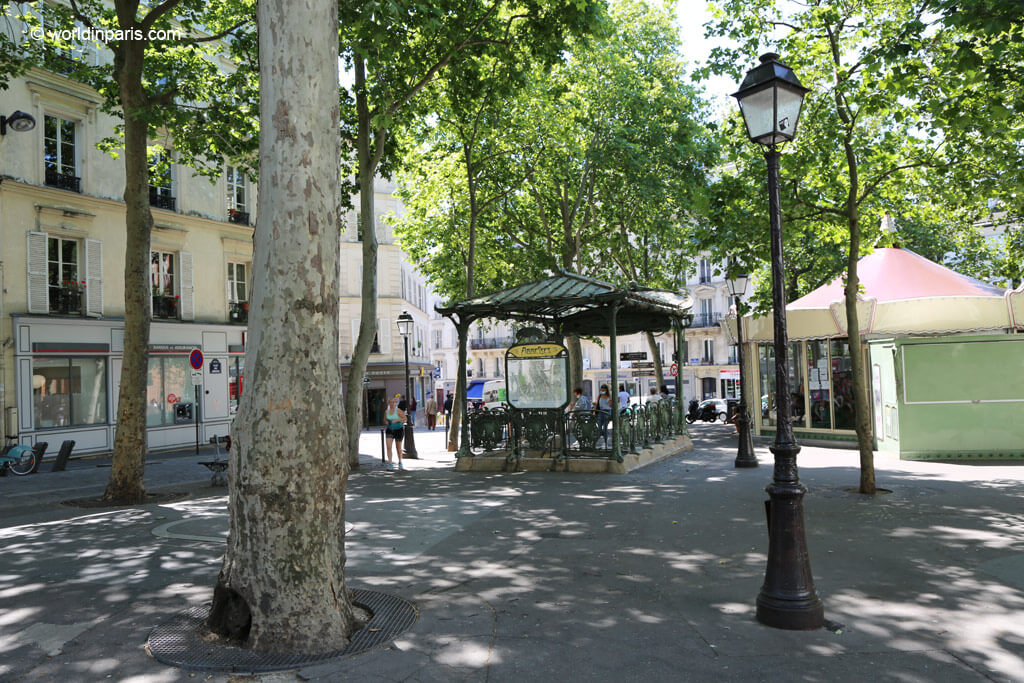
The last stop of this Montmartre walking tour is the charming Place des Abbesses. Take your time to enjoy the lively square, with its carousel, shaded benches, and the iconic Guimard metro entrance.
The Abbesses metro station is the deepest in Paris, reaching 36 meters below the ground!
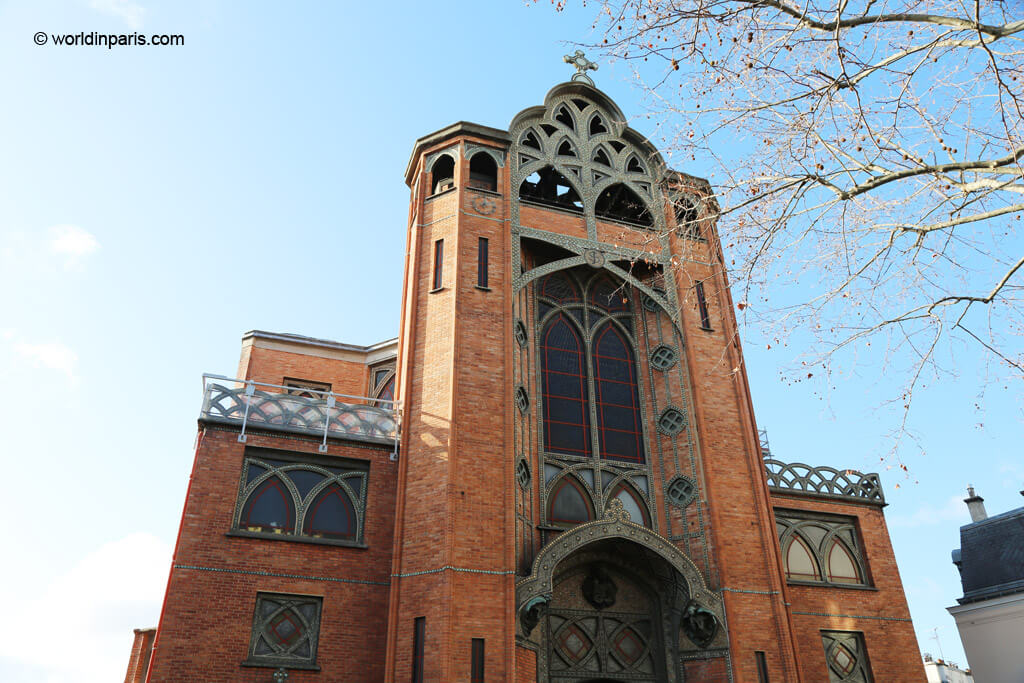
Nearby, don’t miss the Church of Saint-Jean de Montmartre (1894–1904), designed by Anatole de Baudot. He introduced the idea of socially and economically conscious architecture in harmony with the industrial development of the time. In this building, he blended industrial materials, creating (in my opinion) a beautiful result.
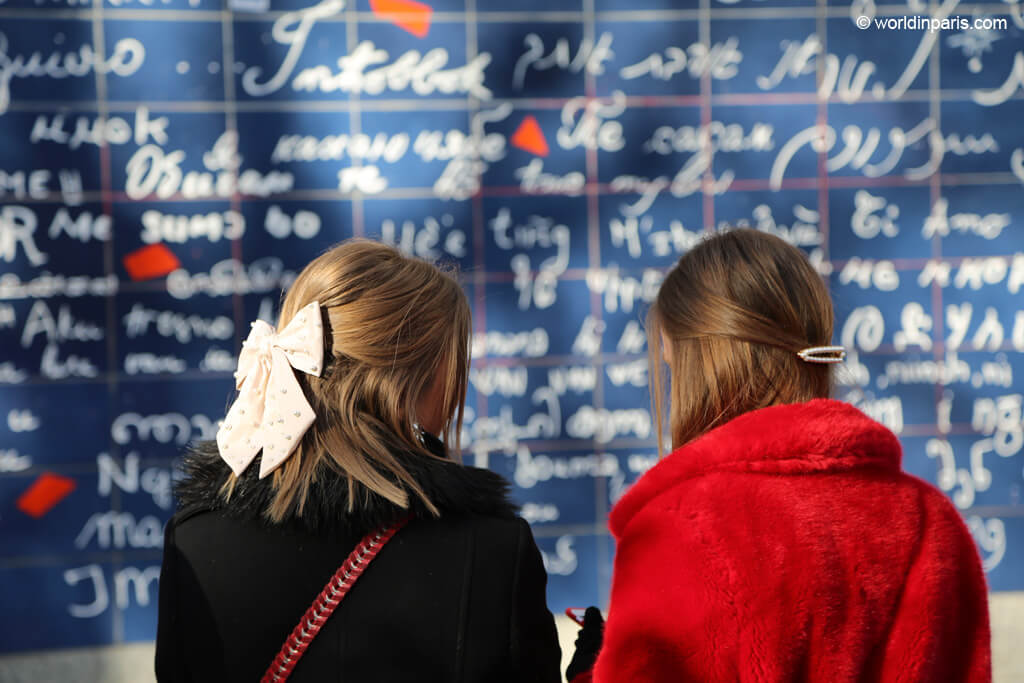
Nearby, in Square Jean Rictus (point #20 on the Montmartre walking tour map), you can see the famous Love Wall, but it is always swarming with people. Instead, make your way to its back corner to discover the hidden Jardin des Abbesses, a lovely small oasis in Montmartre.
After the Love Wall, this Montmartre walk ends at the picturesque café Le Vrai Paris at 33 Rue des Abbesses (#21 on the map) for a more than deserved drink and quick eats.

Click here to read about other Paris Attractions
Pin it now & read it later