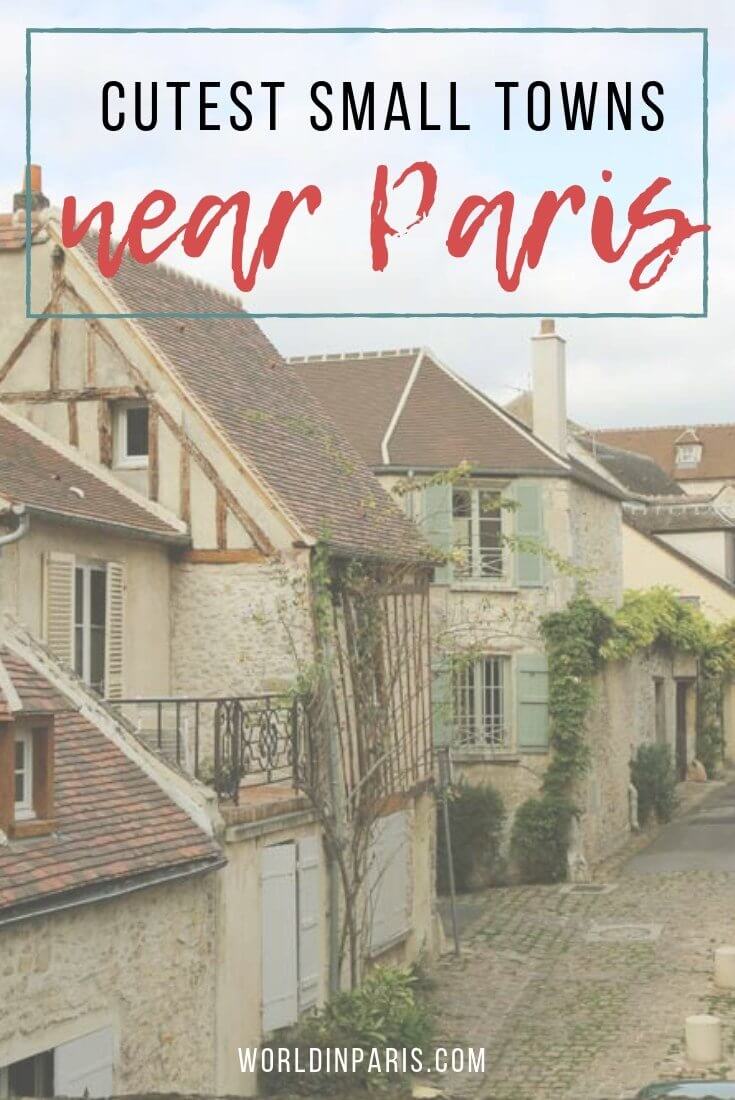
Cute Towns Near Paris for the Perfect City Escape
Uncover the best small towns near Paris where time seems to stand still, and the quintessential French experience awaits. If you are in a hurry, jump to the list of small towns to visit near Paris here.
After a few days of navigating crowds and museum lines in Paris, even the most devoted city lover needs a breather. The good news? Some of France’s most charming villages sit less than an hour from Paris by train – places that offer a completely different side of France than the one you’ll find in Le Marais or along the Champs-Élysées.
These aren’t the obvious stops like Versailles (I have a separate Versailles guide for that). These are the villages where time slows down, where church bells replace car horns, and where you’ll find locals lingering over coffee rather than tourists checking their maps.
Whether you’re craving medieval walls, riverside walks, or simply a quiet French lunch without tourist menus, these 10 small towns near Paris offer the authentic village escape you’re looking for.
Last update: March 2026
Quick Guide: Choose the Best Small Town Near Paris for You
Not sure where to go? Use this quick guide to find the small town near Paris that best suits your travel style.
- Medieval History → Provins, Senlis, Moret-Sur-Loing
- Art Enthusiasts → Giverny, Auvers-Sur-Oise, Barbizon
- Nature & Rivers → Chevreuse, Bougival, La Roche-Guyon
- Château Life → Chantilly
How to Reach Small Towns from Paris (2026 Update)
1. By Train
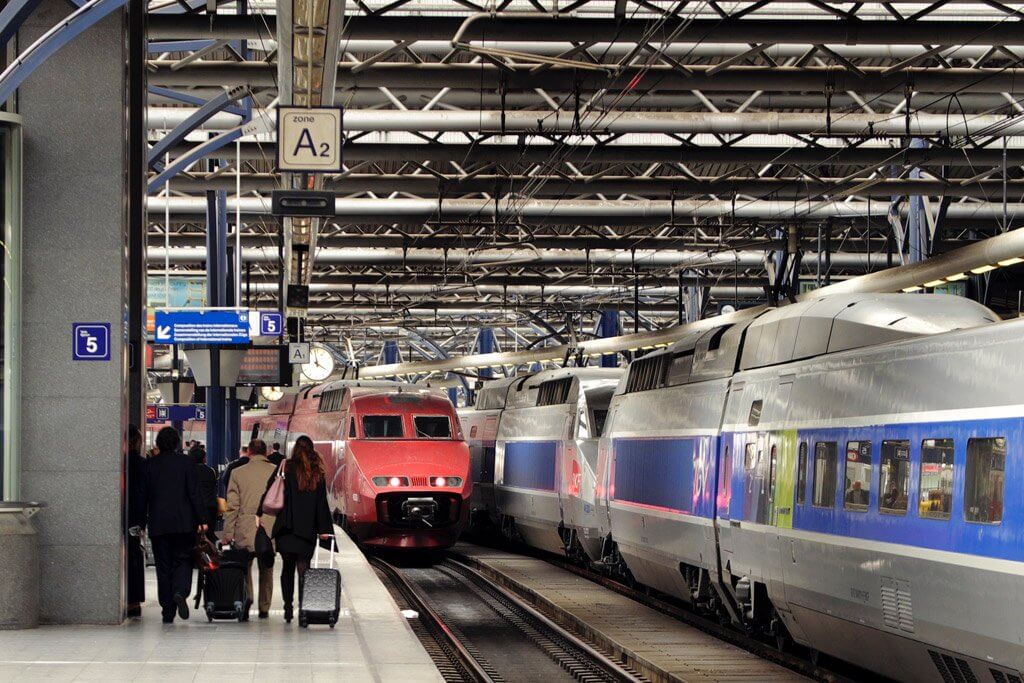
All the towns close to Paris listed below are easily reached by train. Generally, trains are on time, comfortable, relatively cheap, and my favorite way to explore the countryside near Paris.
Since January 2025, you can also use the Paris metro tickets (2,55€ full price) to explore the Ile de France region.
2. By Guided Tour
Forget about planning, entrance tickets, or train schedules; just hop on a coach or minivan and enjoy your day with the company of an expert guide!
Best Guided Tours to Visit the Paris Countryside
TOUR | DURATION | LOCATION | SUBJECT | SMALL GROUP? | PRICE |
|---|---|---|---|---|---|
5 hrs | Giverny | Arts, Monet | Limited to 8 pax | ||
4 hrs | Auvers-sur-Oise | Arts, Van Gogh | Private | ||
1 day | Giverny and Auvers-sur-Oise | Arts | Private |
By Car
If you need to rent a car, choose a car rental office located on the outskirts of Paris. They usually have better prices, and you avoid the hassle of driving through the city – Check out this quick guide to driving in France
I use and recommend DiscoverCars.com. DiscoverCars compares 900 companies at over 53,000 locations to guarantee you the best price. Click here for our best tips for renting a car in France.
Map of the Best Small Towns To Visit Near Paris
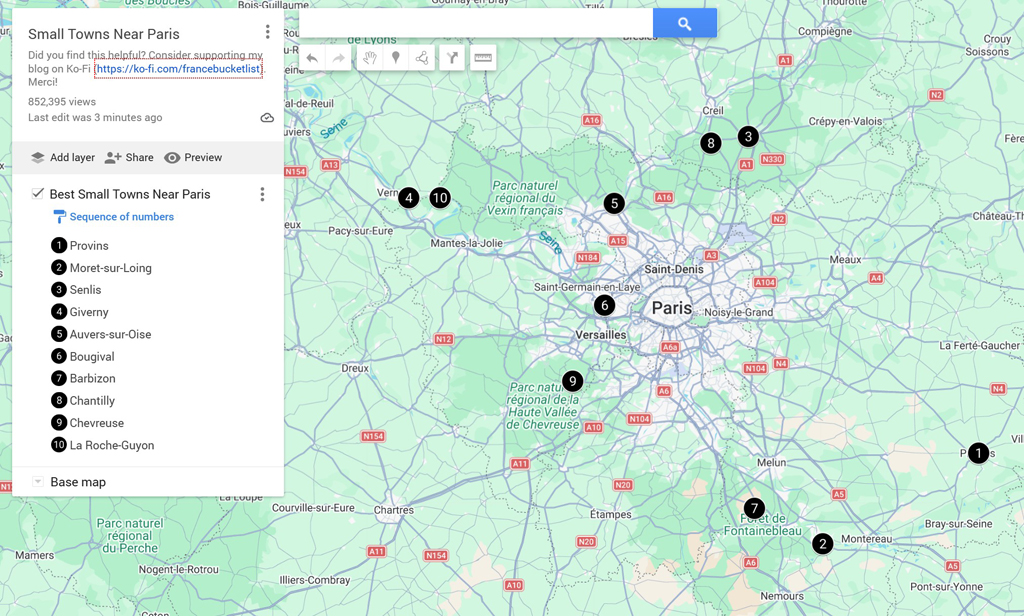
Click here to view this map of small towns near Paris on Google
Best Small Towns Near Paris by Train
- Provins – Unesco Medieval Walled City
- Moret-Sur-Loing – Sisley’s Riverside Canvas
- Senlis – Cobblestone Medieval Gem
- Giverny – Monet’s Garden Paradise
- Auvers-sur-Oise – Van Gogh’s Final Masterpiece
- Bougival – Impressionist Seine Promenade
- Barbizon – The Original Artist Colony
- Chantilly – Where Horses Meet History
- Chevreuse – The Perfect Valley Escape
- La Roche-Guyon – Cliff-Carved Castle Village
1. Provins – Unesco Medieval Walled City
→ Read my full guide to Provins
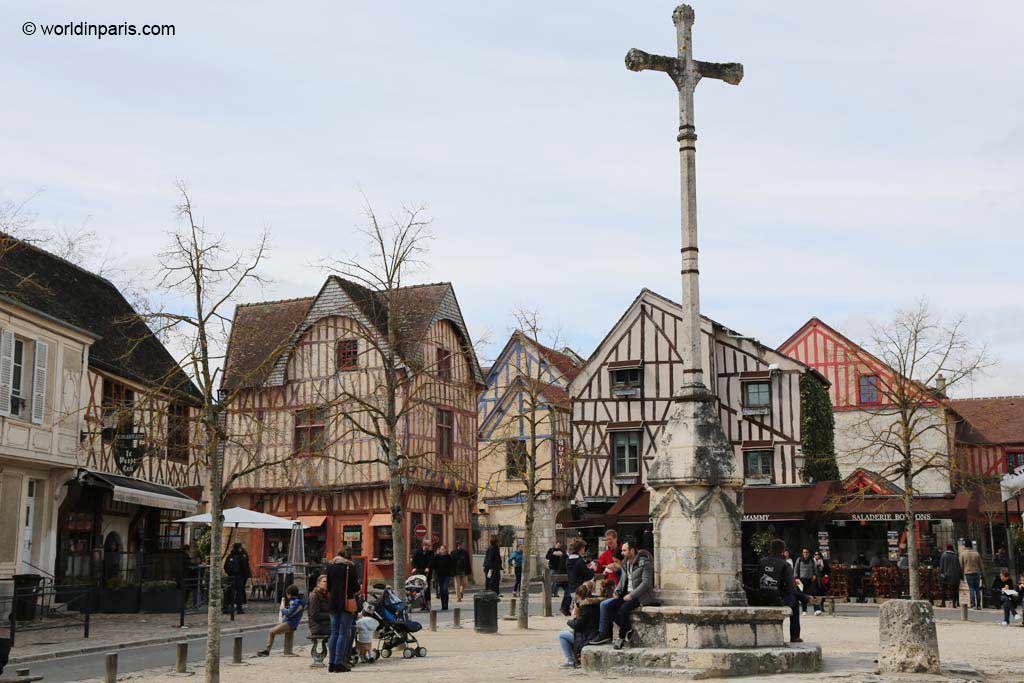
Provins is one of the most beautiful medieval towns in France. Massive 13th-century ramparts, cobblestone streets lined with half-timbered houses leaning toward each other – this is what medieval France actually looked like, preserved so well that UNESCO designated the entire town a World Heritage Site.
In Medieval times, Provins was the capital of the powerful Counts of Champagne. Thanks to the Counts’ protection and its strategic location, the town became one of the main actors in the early development of international trade fairs and the wool industry in Europe during the 9th to 18th centuries.
If you’re lucky to visit in June, don’t miss its famous Medieval Fair in the upper town, when locals dust off their period costumes to sell goods using techniques from the 1200s. The Christmas version in December brings mulled wine and torchlit processions through those same cobblestone streets.
The real surprise, however, lies underground. Beneath the medieval houses, a network of vaulted galleries and passageways stretches for kilometers – storage spaces for the medieval fairs and escape routes carved from the 11th century onward, which you can visit with a guided tour.
- Best for: Medieval history, family-friendly activities, photography
- Getting there: Direct train from Gare de l’Est (1h 22min, hourly)
- Don’t miss: Underground galleries tour (book ahead), rampart walk for views
- When to visit: June Medieval Fair or December Christmas Market for full atmosphere
2. Moret-Sur-Loing – Sisley’s Riverside Canvas
→ Read my full guide to Moret-sur-Loing
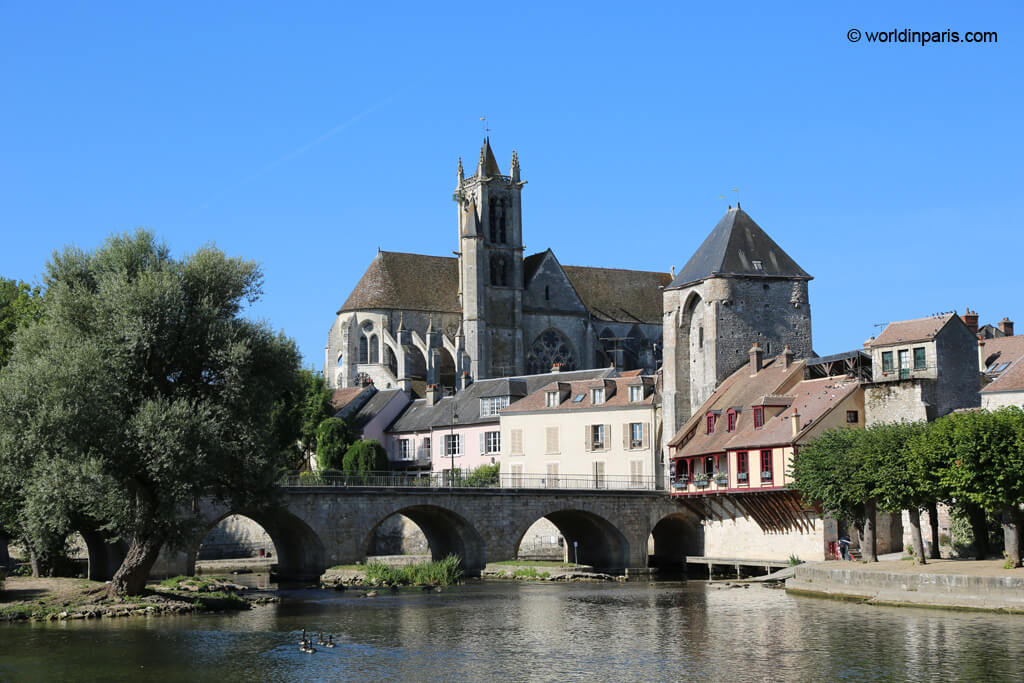
If you are looking for medieval towns close to Paris, far from tourist crowds, Moret-sur-Loing is your answer. Moret sits on the eastern edge of Fontainebleau Forest, a small fortified town that time seems to have forgotten. Medieval gates frame narrow streets where half-timbered houses lean over the Loing River, and the riverside views are so picture-perfect that Impressionist Alfred Sisley spent his final years here painting them over and over.
Walk through the Porte de Bourgogne (12th-century gate tower) into streets that look exactly as they did when Sisley arrived in 1889. He painted the town’s mill, the bridge, the church tower – over 300 paintings of Moret during his 10 years here. The tourism office offers a self-guided walk with panels showing Sisley’s paintings at the exact spots where he set up his easel.
Beyond its artistic heritage, Moret is perfect for outdoor lovers. The Loing River is ideal for kayaking and nearby forest trails are excellent for hiking and biking. On summer evenings, locals gather at riverside cafés with wine and cheese, exactly the quiet French town life you imagined.
Love sweets? The town makes famous barley sugar candies (sucres d’orge) in traditional twisted sticks – you’ll see them in shop windows everywhere
- Best for: Medieval architecture, outdoor activities (kayaking, hiking), peaceful escapes
- Getting there: Train from Gare de Lyon to Moret-Veneux-Les Sablons (48 min), then 15-min walk
- Don’t miss: Sisley painting trail, kayaking the Loing River, barley sugar shops, Fontainebleau (10km away, easy to visit both)
- When to visit: Summer for kayaking and riverside cafés
3. Senlis – Cobblestone Medieval Gem
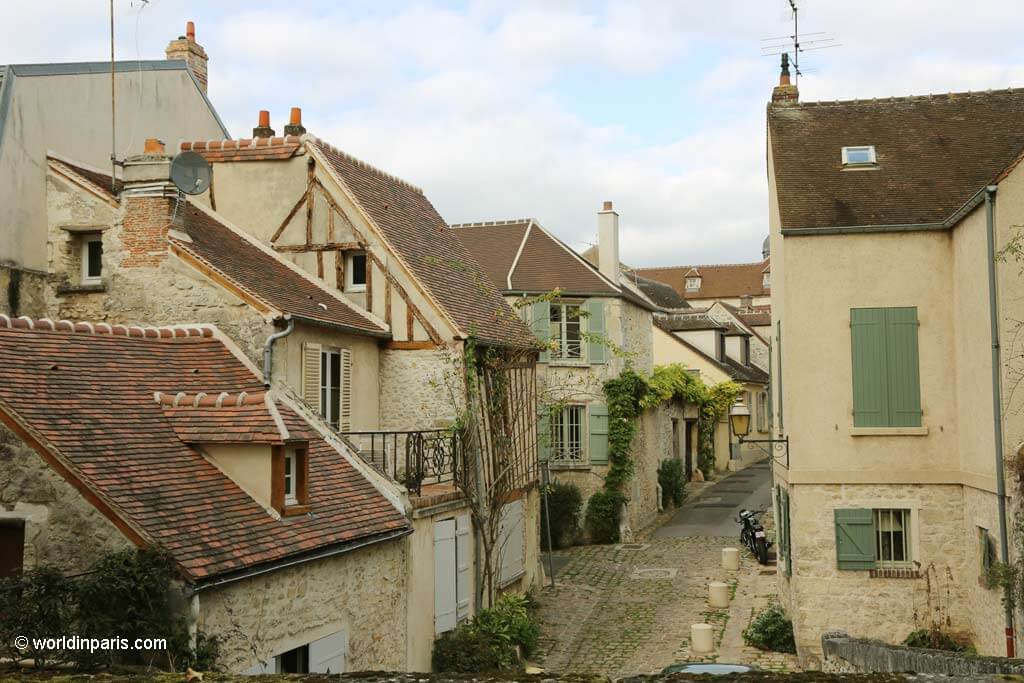
Senlis is one of my favorite medieval towns near Paris. Without a direct train connection, it’s a place most tourists somehow miss – which is exactly what makes it perfect. Cobblestone streets wind between 10th-18th century buildings, Gothic cathedral spires rise against the sky, and Roman walls still circle parts of the old town.
Senlis is a royal town, the cradle of the Capet dynasty. Hugh Capet was lord of Senlis before becoming the first French king of the House of Capet in 987 and you can still see the remains of their medieval palace.
Walking Senlis, you’re literally walking through layers of history. The historical center still follows its medieval layout – narrow lanes, half-timbered houses, hidden courtyards behind ancient doorways. The town is also well known for its Roman heritage, and you can still see remains of the 3rd-century fortress and the Gallo-Roman arena (1st century) used to host gladiator games and chariot races.
Because Senlis is close to Chantilly (just 20 minutes by bus), you can easily visit both in one day. Start in Chantilly for the château and gardens, then catch the afternoon bus to Senlis for medieval atmosphere and dinner. The combination works perfectly – grand château life versus authentic medieval town.
- Best for: Medieval history, architecture lovers, uncrowded exploration, photography
- Getting there: Train to Chantilly-Gouvieux (hourly), then bus #645 to Senlis (20 min, every 30 min)
- Don’t miss: Gothic cathedral, Roman arena and walls, medieval streets. Combine with Chantilly
- When to visit: Spring-fall for best weather
4. Giverny – Monet’s Garden Paradise
→ How to plan a day trip to Giverny from Paris
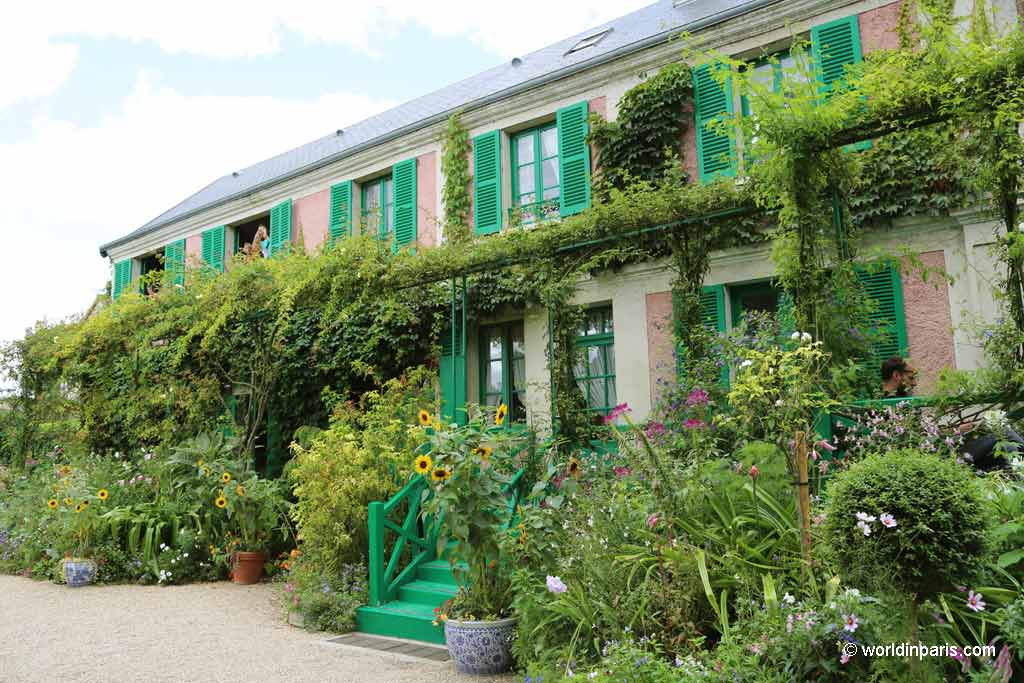
Giverny is one of the most famous villages near Paris, but for good reason – this is where Claude Monet lived and worked from 1883 until his death in 1926. Water lilies floating on the pond, the Japanese bridge draped in wisteria, rose-covered archways – these aren’t just pretty gardens, they’re living Impressionist paintings you can walk through.
The village sits 74km northwest of Paris in Normandy, surrounded by rolling countryside and the gentle Epte River. Although there’s no direct train connection, a shuttle bus from the station makes the trip to Giverny easy.
Visit Monet’s House first – the butter-yellow dining room with blue-tiled walls, his bedroom overlooking the garden, and the studio filled with his Japanese print collection. Then head to the gardens. The water garden (with the famous bridge) is magical in late April through June when wisteria blooms and water lilies first appear. The flower garden explodes with color from spring through fall – Monet planted it so something was always blooming whenever he wanted to paint.
Arrive early (gates open 9:30 a.m.) before tour groups fill the paths. Then, explore the village: the Impressionist Museum, small galleries, and lovely cafés.
- Best for: Impressionist art lovers, photographers, garden enthusiasts
- Getting there: Train from Gare Saint-Lazare to Vernon (1h, hourly), then bus shuttle to Giverny
- Don’t miss: Water garden in late spring (wisteria bloom), Monet’s yellow kitchen
- When to visit: Monet’s House is open from 1 April to 1 November. Read my guide to Giverny to see what’s in bloom each month.
5. Auvers-sur-Oise – Van Gogh’s Final Masterpiece
→ Read my full guide to Auvers-sur-Oise
Auvers-Sur-Oise is known as the Impressionists’ Village, but most visitors come for one artist: Vincent van Gogh. This is where Van Gogh spent his final 70 days in 1890, painting furiously – 70 works in 10 weeks, including some of his most famous pieces. The wheat fields, the church with its impossible blue sky, the thatched cottages – they’re all still here, looking remarkably as they did when Van Gogh captured them.
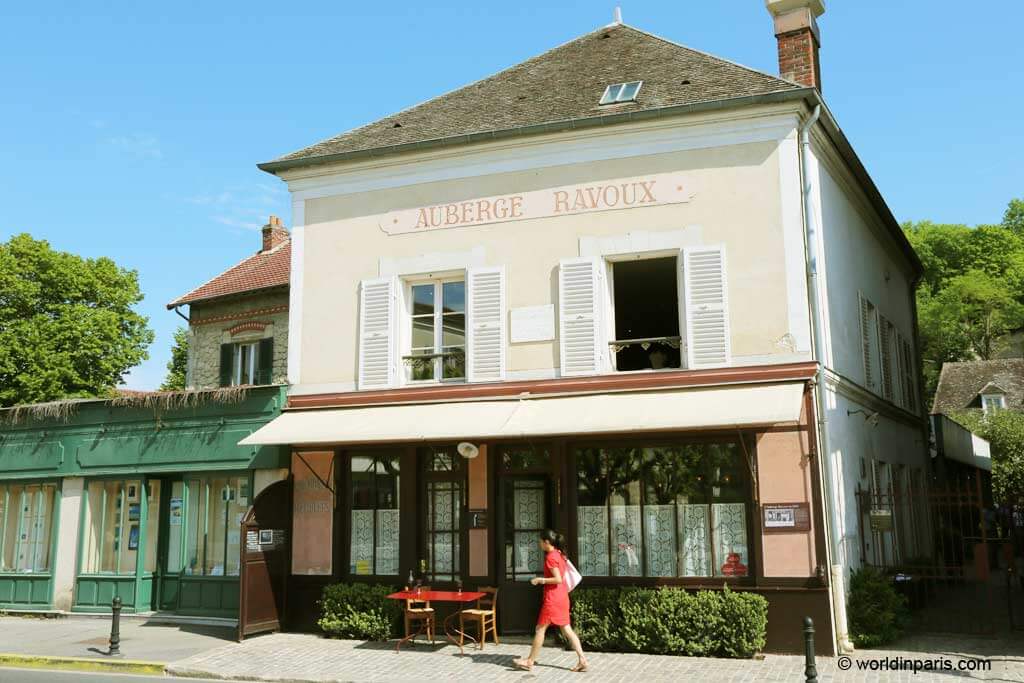
What I love about Auvers is how intact it remains. Stroll around the village to visit the Church, Dr. Gachet’s House (home of Paul Gachet, who cared for Vincent van Gogh in Auvers), and the Auberge Ravoux, where Van Gogh lived – and where he died after shooting himself in the nearby wheat fields. Van Gogh’s grave sits in the local cemetery, side by side with his brother Theo, covered year-round with flowers left by visitors.
The Painters’ Pathway is a self-guided walk with panels showing Van Gogh’s paintings at the exact spots where he set up his easel. I found it strange and moving to stand where he stood, seeing the same view, understanding exactly what he captured. The walk also passes spots where Cézanne, Pissarro, and other Impressionists worked.
- Best for: Van Gogh fans, Impressionist art history
- Getting there: Train from Gare du Nord to Auvers-sur-Oise (41 min, hourly)
- Don’t miss: Auberge Ravoux, Church at Auvers, wheat field walk, Van Gogh’s grave. You can combine it with Giverny with this guided tour
- When to visit: Spring-summer when fields bloom like his paintings
6. Bougival – Impressionist Seine Promenade
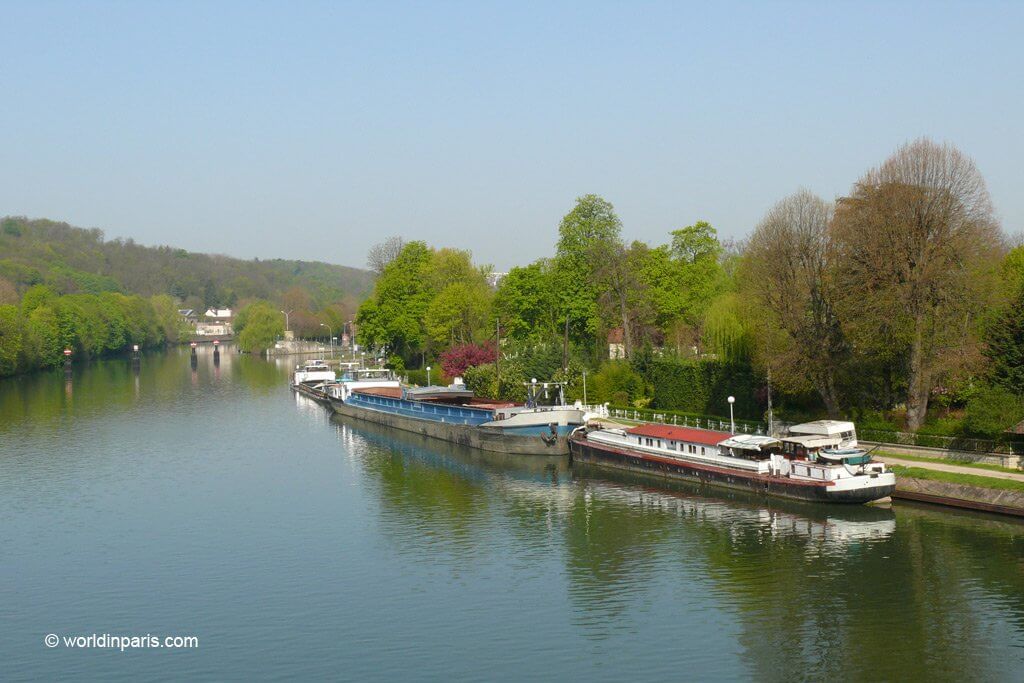
Bougival is one of the best-kept secrets near Paris – a riverside village where the Impressionists came to paint the Seine River in the 1860s-1880s. Monet, Sisley, Renoir, Berthe Morisot – they all spent long summers here trying to capture the play of light on water, the river’s changing moods, the Sunday crowds at riverside cafés.
What makes Bougival special is the Impressionist Walk along the Seine’s banks. Life-size panels show reproductions of famous paintings at the exact spots where the artists painted them. Stand where Monet stood in 1869 painting La Grenouillère (a floating café that no longer exists). See Sisley’s view of the bridge. Watch the same light on water that obsessed these painters 150 years ago.
The village itself is charming – a Romanesque-style church, narrow streets with old houses, and cafés overlooking the Seine. You’ll also find remains of the Machine de Marly, a massive hydraulic system built under Louis XIV to pump water from the Seine up to Versailles’ fountains. At the time, it was considered the eighth wonder of the world!
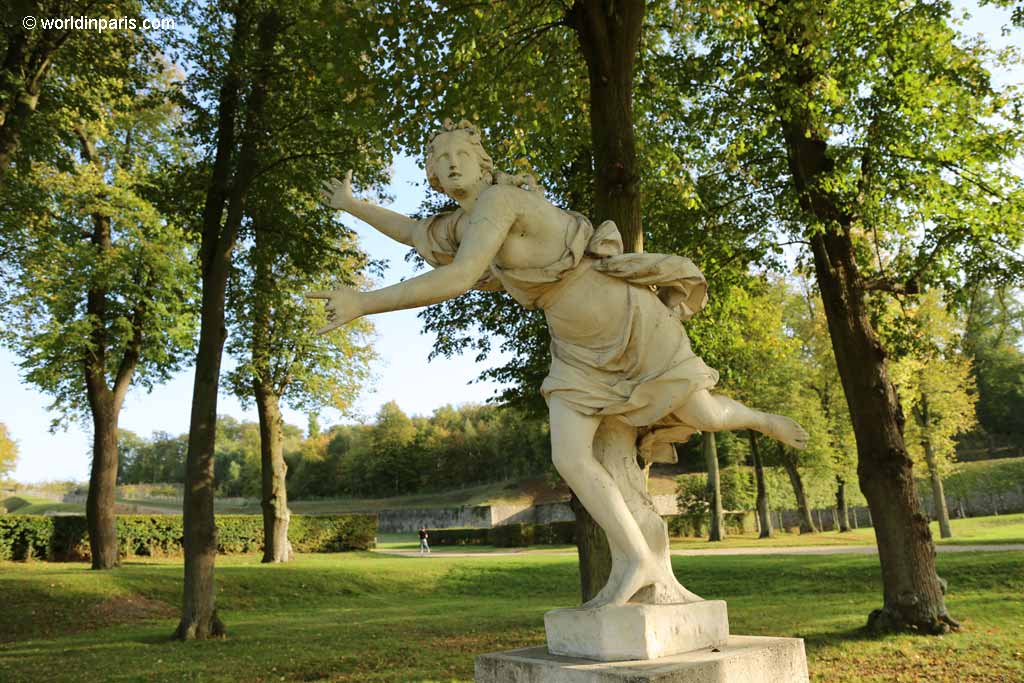
After visiting Bougival, I always like to stop in Marly-le-Roi for a picnic in the park. Marly-le-Roi is another lovely village that was home to Louis XIV’s weekend palace. The palace was destroyed during the French Revolution, but you can still see beautiful remains scattered across the park, along with some of the monumental fountains that once adorned the formal French gardens.
- Best for: Impressionist art fans, Seine river walks
- Getting there: Train L from La Défense to Bougival (1h, every 20 min).
- Don’t miss: Impressionist Walk, Machine de Marly remains. Combine it with Marly-le-Roi (on the same train line)
- When to visit: Late afternoon in summer for the light Impressionists loved
7. Barbizon – The Original Artist Colony
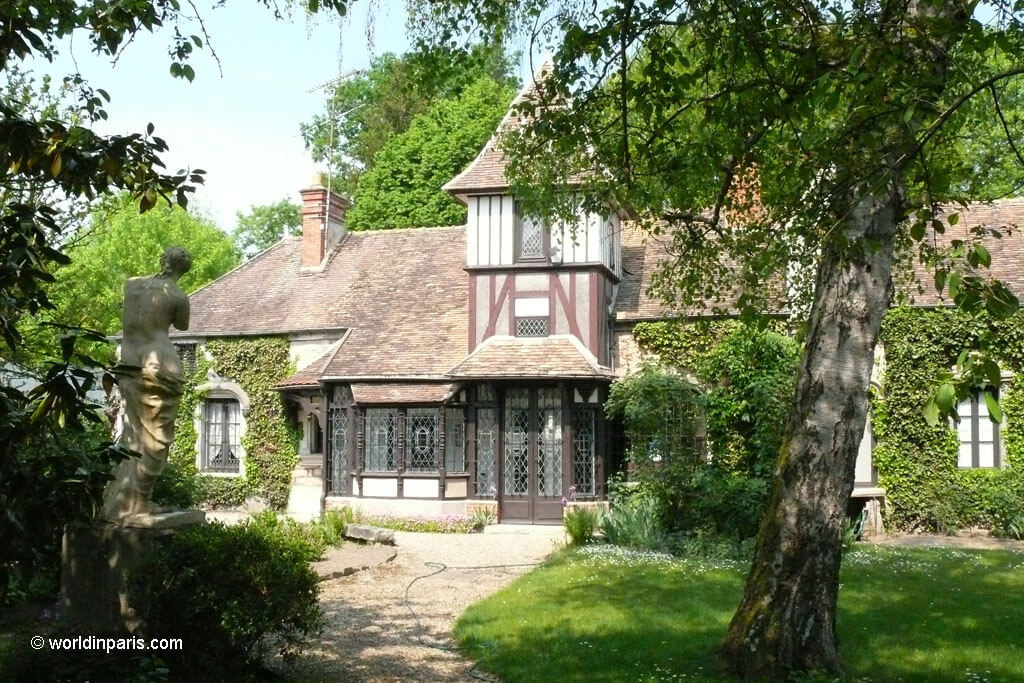
Barbizon is a tiny village on the edge of Fontainebleau Forest that became the birthplace of French landscape painting. In the 1830s-1860s, artists fled Paris studios to paint nature directly – revolutionary at the time. They settled in Barbizon’s guesthouses, spent days in the forest capturing light on trees and rocks, then returned to village inns to discuss technique over wine. This was the Barbizon School, the precursor to Impressionism.
The village today looks remarkably unchanged – one main street lined with old houses, artist studios, galleries, and the historic Auberge Ganne (now a museum) where painters like Théodore Rousseau, Jean-François Millet, and Camille Corot lived and worked. And at the edge of the village, marked trails lead into Fontainebleau Forest to spots the painters frequented.
Because Barbizon is just 10 km from Fontainebleau, it’s easy to visit both in a single day: explore the Château de Fontainebleau in the morning, then spend the afternoon wandering the charming streets of Barbizon. I did this as a day trip from Paris, renting a bike in Fontainebleau to ride to Barbizon (but you can also take the bus if you prefer).
- Best for: Art history fans, nature lovers, hikers, photographers
- Getting there: Train from Gare de Lyon to Fontainebleau-Avon, then bus to Barbizon (line 3421, 20 min), bike, or taxi
- Don’t miss: Auberge Ganne museum, artist studios on main street, forest walks
- When to visit: Visit in late afternoon for the golden light the Barbizon painters loved
8. Chantilly – Where Horses Meet History
→ Read my full guide to Chantilly
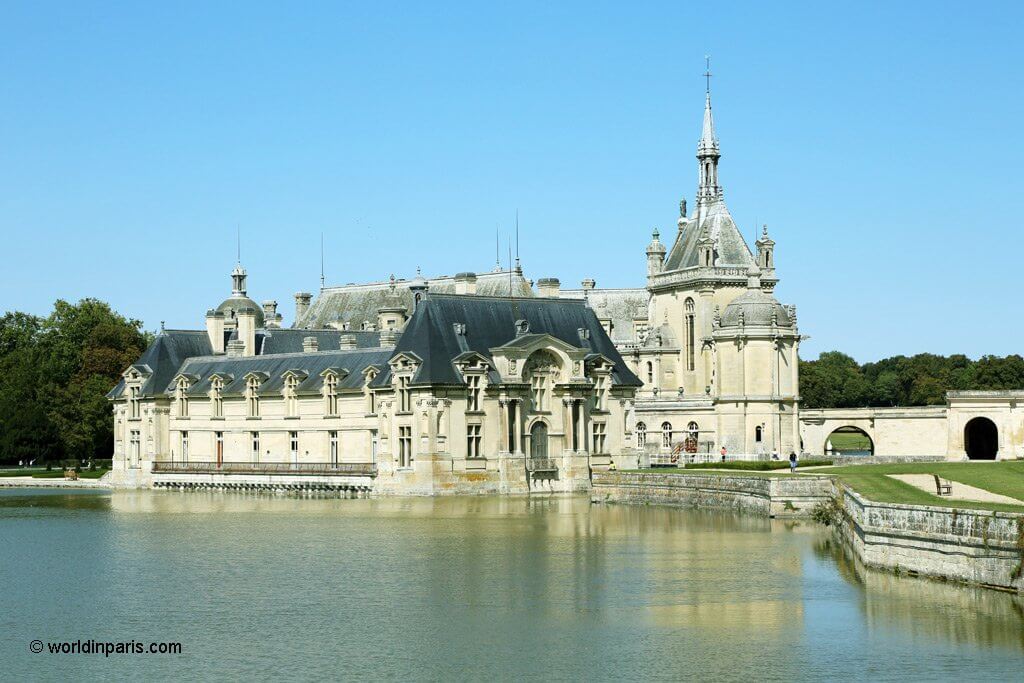
Chantilly is a lovely town in Hauts-de-France region famous for two things: the spectacular Château de Chantilly and the Grand Stables (Les Grandes Écuries). If you love either châteaux or horses, Chantilly delivers both spectacularly.
The Château de Chantilly is one of the best castles near Paris to visit. It was built in the 16th century for the House of Montmorency, then owned by the Princes of Condé (cousins to the French King). Inside, you’ll find one of France’s finest art collections – paintings by Raphael, Botticelli, and Delacroix. But my favorite part is the gardens that surround the château. Designed by Le Nôtre (who also designed the Tuileries Gardens and Versailles), they’re stunning and include formal French gardens, an English garden, water features, and a hamlet.
Commissioned by the Prince of Condé in the 17th century, the Great Stables are perhaps the world’s most beautiful and could house 240 horses and 500 hounds. He believed he’d be reincarnated as a horse and wanted a palace worthy of his return. Today, they house the Horse Museum and host spectacular equestrian shows, which are included in the museum ticket.
Beyond the château and stables, Chantilly has the famous Hippodrome (racecourse) where major races happen in spring and fall. The town itself is pleasant for wandering – cafés, boutiques, a few good restaurants. And the surrounding Chantilly Forest has excellent walking and biking trails.
- Best for: Château lovers, horse enthusiasts, families
- Getting there: Direct train from Gare du Nord to Chantilly-Gouvieux (30 min, hourly)
- Don’t miss: Grand Stables equestrian show, château gardens
- When to visit: Spring-summer for gardens and outdoor shows. This combo ticket Château + Gardens + Great Stables will save you money.
9. Chevreuse – The Perfect Valley Escape
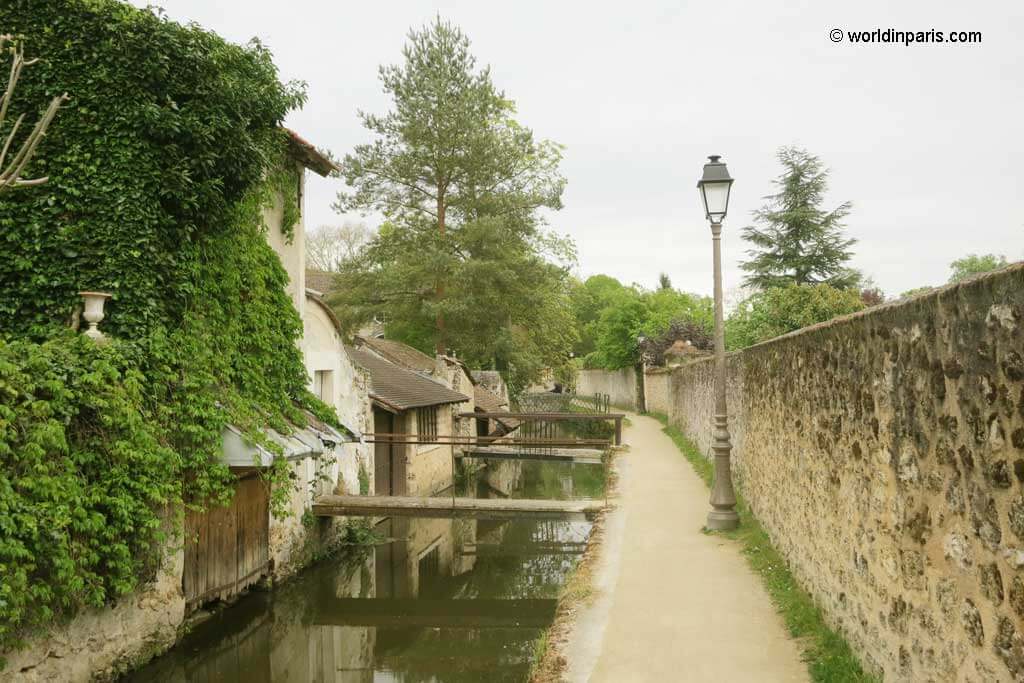
Chevreuse is a small medieval village nestled in the Haute Vallée de la Chevreuse. A hiking paradise, this valley south of Paris is your perfect escape if you are craving nature and fresh air more than art museums: valley and forest trails, riverside paths, and also medieval buildings along the way.
The village itself is small but perfectly formed: stone houses, a medieval church, a handful of cafés and bakeries where locals gather. It is dominated by the Château de la Madeleine, an 11th-century fortified castle perched on a hilltop. The castle itself, with its towers and ramparts, is interesting, but the real draw is climbing up for its panoramic views over the valley.
Chevreuse is also known for the Chemin des Petits Ponts (Path of Little Bridges), a picturesque pedestrian walk along the Yvette River. The path winds past old laundries, tanneries, and watermills – remnants of the village’s working past. Small stone bridges cross the river every few hundred meters, each with views worth photographing.
For serious hikers, there’s an 18 km trail from La Verrière train station through the valley to Saint-Rémy-lès-Chevreuse station. I’ve done this hike more times than I can remember and never get tired of it. The path crosses forests, follows rivers, and passes through the village of Chevreuse at the midpoint. If you decide to hike this trail, buy your sandwich (or everything you need for a picnic halfway through the hike) before leaving Paris.
- Best for: Hikers, nature lovers, families wanting outdoor activities
- Getting there: RER B to St-Rémy-lès-Chevreuse (45 min, hourly), then 3km walk to the village
- Don’t miss: Château de la Madeleine hilltop views, Chemin des Petits Ponts riverside walk
- When to visit: Spring-fall for best hiking weather. The best day for a bit of local life is Saturday.
10. La Roche-Guyon – Cliff-Carved Castle Village
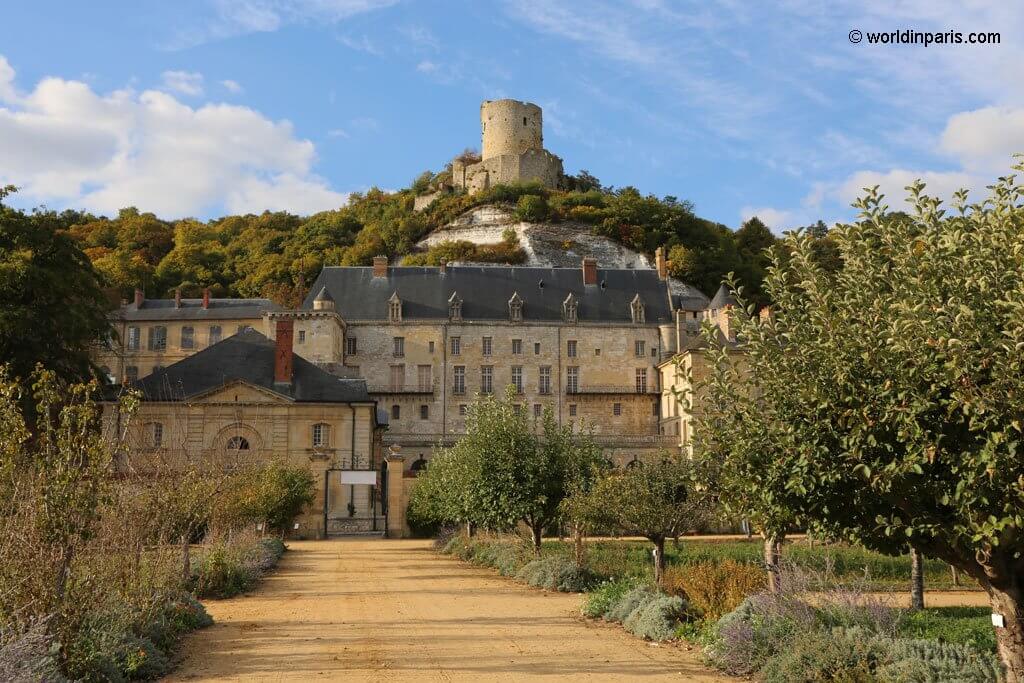
La Roche-Guyon is the only village in Île-de-France with the “Most Beautiful Villages of France” label. The village sits in a dramatic bend of the Seine River, with white chalk cliffs rising behind it, and is dominated by a 12th-century castle built partly into the cliff itself. Surely, La Roche-Guyon is one of the most unusual and photogenic villages near Paris!
I visited La Roche-Guyon and Giverny by car on a summer day. The castle is what makes La Roche-Guyon extraordinary. The original fortress was a medieval keep built on top of the cliff, 60 meters above the Seine. The château at the base of the cliff was added later. The two are connected by a 100-step underground staircase carved through solid chalk that you can climb for spectacular views over the Seine Valley.
The château’s owners, the La Rochefoucauld family, were Enlightenment thinkers who created an experimental kitchen garden in the 18th century. Unlike typical pleasure gardens, it was designed for scientific agricultural experiments – testing new vegetables, cultivation techniques, and fruit tree training methods. You can still visit the restored garden today, which is labeled a “remarkable garden.”
The village was a popular 19th-century resort for Parisian artists and writers. You’ll find beautiful 16th-18th century houses, a Romanesque church, and terraced gardens climbing the chalk slopes. The Seine riverside path is perfect for walks. And because it’s easier to visit La Roche-Guyon by car, the village remains remarkably uncrowded even on summer weekends.
- Best for: Castle lovers, photographers, dramatic landscapes, uncrowded escapes
- Getting there: best by car (72km, 53 min drive) or train to Mantes-la-Jolie (same train line to reach Giverny) + bus. Easy to combine with Giverny by car
- Don’t miss: Underground staircase to cliff-top keep, Kitchen Garden, Seine valley views
- When to visit: Spring-fall (castle closed in winter)
There you have it – 10 charming towns near Paris for the perfect city escape. Provence isn’t the only place for authentic French life; some are just a train ride from Paris.
Pin it now & read it later